How Innovate UK’s Launchpad for Eastern England is helping agri-food innovation move from concept to commercialisation
The Innovate UK’s Launchpad programme has been created to enable local economic growth by supporting clusters of small and medium sized enterprises (SMEs) and the most innovative businesses to progress their ideas toward commercialisation. Each Launchpad has been developed in collaboration with local leadership, to strengthen innovation in targeted clusters across the UK. In Greater Lincolnshire, the partnership was led by the UK Food Valley.
In Eastern England, one of the UK’s most important food-producing regions, strengths in farming, food production and logistics, run in parallel with a significant research and innovation base spanning crop and biotech science, automation, robotics and digital food systems.
The Innovate UK Launchpad for Eastern England was designed to build on these regional strengths by helping agri-tech and food-tech businesses test new ideas, build partnerships and move promising innovations closer to commercialisation. From geothermal growing systems and circular farming to insect protein, agricultural robotics and new food products, the funded projects show the breadth of innovation already taking place across the region.
For the UK Food Valley, the programme also demonstrates the value of combining place-based innovation with collaborative partnerships: connecting businesses with universities, growers, technology specialists, investors and support partners across the region, and create new opportunities for innovative ideas to flourish and grow the sector. This was enabled by close collaboration with Innovate UK, Innovate UK Business Connect, Connected Innovation, Norfolk County Council, Suffolk County Council and Cambridgeshire and Peterborough Combined Authority.
Lincolnshire innovation supported by the programme
Three Launchpad projects demonstrate the strength and diversity of innovation taking place within Lincolnshire itself.
At the University of Lincoln’s Riseholme campus, the GASTRO project is testing how geothermal heating and advanced glass technology could support more efficient greenhouse food production.
The project brings together NFU Energy, Pilkington NSG and the University of Lincoln and is being delivered within the UK’s first geothermal glasshouse. Eighteen 200-metre-deep boreholes provide geothermal heat, while an infrared-reflective glass coating is being tested to reduce cooling requirements and enable more efficient use of CO2.
Launchpad support has enabled the team to test and build evidence around how the technology performs in a real food-production environment, helping reduce some of the risk associated with future adoption and investment.
Elsewhere in Lincolnshire, Pollybell Farm is exploring how farming systems can become more circular.
The fifth-generation organic farming business is using its Launchpad-funded work to investigate the relationship between biochar, poultry waste and arable production. Trials include adding biochar to chicken bedding and stored manure to explore whether nutrients can be retained more effectively while reducing emissions and waste.
The work is helping Pollybell look at the chicken and arable supply chain as one connected system, creating evidence that can inform future decisions about which applications have the strongest potential to scale.
Fairman Knight & Sons is approaching circularity from another direction. The Lincolnshire business uses surplus food as feedstock for commercial-scale insect farming, producing outputs including insect protein, fertiliser, bio-oils, chitin and chitosan.
Launchpad support enabled the business to undertake feasibility work and access specialist mentoring, helping strengthen its commercial model and build investor confidence. The company has also developed strong local connections, with founder Julian Knight identifying UK Food Valley as one of the first major stakeholder relationships the business established after coming to Lincolnshire.
Together, these projects show what place-based innovation can look like in practice: research institutions, farms and emerging businesses testing new approaches to some of the food system’s biggest challenges.
Connecting Lincolnshire with innovation across Eastern England
The benefits of the programme also extend beyond businesses based within the county. Projects across Eastern England are creating partnerships with Lincolnshire organisations and developing technologies with potential applications for the county’s agri-food sector.
Versatile RobotX, for example, is developing robotics and AI to automate repetitive tasks in leafy green production and is working with JEPCO in Lincolnshire.
Tropic Bioscience is applying gene-editing technology to tropical crops and worked with Lincolnshire-based AI Digital, which developed a software tool to support the identification of crop traits.
These collaborations illustrate the wider role of UK Food Valley within a connected regional innovation ecosystem, helping Lincolnshire businesses and expertise participate in projects that extend across Eastern England.
Turning evidence into commercial progress
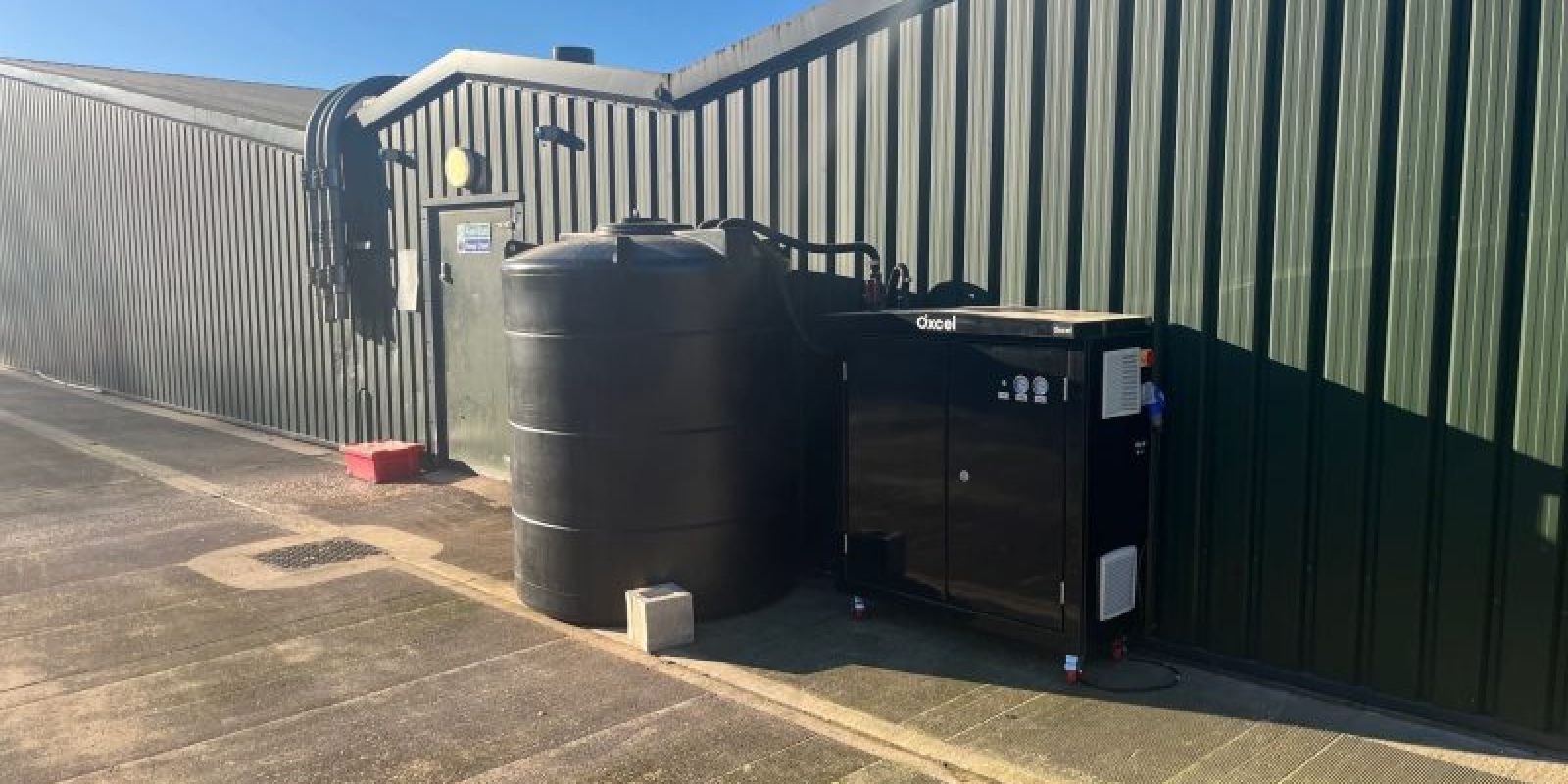
For Oxcel, the Launchpad has helped build stronger evidence around a livestock water technology designed to improve productivity and reduce inputs.
The business worked with an academic partner to run controlled trials, helping it understand not only whether the technology works, but why. The project also supported work on suppliers, product scalability and farm trials, accelerating a route towards commercial revenue that the business says could otherwise have taken years.
James White Drinks used Launchpad funding to develop a nitrate gel product as part of its Beet It Sport range. The funding helped the company take on the commercial risk of working with an external manufacturing partner in an area outside its usual production expertise.
The resulting product has since launched in 12 countries, including the US and Canada, supporting international growth and increasing demand for the wider Beet It range.
Managing Director Barney Mallinson said:
“The Launchpad funding was incredibly helpful because it gave us the confidence to take the risk in manufacturing it.”
Backing early-stage innovation
For BugBiome, Launchpad support has helped progress research into biological alternatives to chemical insecticides. The company is exploring naturally occurring microbes found on crop leaves and testing whether they can be used to develop new forms of insect control.
The programme helped BugBiome progress from early feasibility work into product development with NIAB, including trials that showed more than a 30% reduction in aphid numbers. The business has also grown from a two-person team to five and raised around £1 million in private investment.
For CEO and co-founder Dr Alicia Showering, early grant support was particularly valuable in helping the business attract private investment while significant research and development work was still required.
Building more resilient supply chains
SHS One Technologies is addressing a different challenge: dependence on strategic materials that are becoming increasingly expensive and difficult to source. Through its PRO-POINT project, the business worked with Claydon Drills to explore alternative wear-resistant materials for agricultural equipment.
The project investigated whether more readily available materials could provide a cost-effective alternative to tungsten, while also helping the company build relationships with manufacturers and coating specialists.
Scaling future food production
NEPSource is developing a scalable indoor farming system for spirulina. What began as a small home experiment has, with Launchpad support, developed into a 4,500-litre pilot facility.
The project has helped the business create a validated production system, develop products and build confidence in moving towards commercial scale. NEPSource has also secured investor funding and says its association with Innovate UK has provided valuable credibility as it grows.
Turning digital innovation into market opportunity
Diometer is developing what it calls the ‘open digital farm’, a model where farmers can select different machines, robots, software and other digital technologies and use them together more easily.
Through the Launchpad, the business has been developing its Agri KG platform, an Agricultural Knowledge Graph designed to organise and connect farm data for AI applications. The project has also supported tools including automated food traceability reporting and soft-fruit forecasting.
Founder and Chief Executive Kevin Gooding said the funding accelerated the company’s plans to enter the market and supported the development costs involved. The project has already contributed to a significant commercial milestone for the business: its first revenues.
As Kevin explains:
“Without the project, I don’t think we would have got to the point where we could earn those revenues.”
Taken together, the projects demonstrate what can happen when innovation funding is combined with strong local assets, research expertise and regional partnerships.
In Lincolnshire, the Launchpad has supported innovations ranging from geothermal greenhouse production and circular farming to new sources of protein. Across the wider Eastern England region, businesses are progressing technologies in robotics, biotechnology, livestock production, sustainable materials, digital farming and new food products.
For UK Food Valley, that connectivity is an important part of the story. The programme has helped create relationships between businesses, growers, academic institutions, technology specialists and investors, while linking Lincolnshire’s agri-food strengths into a much wider regional network.
The technologies may be very different, but the journey is often similar, giving businesses the opportunity to test an idea, build evidence, find the right partners and take the next step towards commercialisation.