EDGE: AGRICULTURE MEETS DEFENCE TO SHAPE LINCOLNSHIRE’S FUTURE
Professors Simon Pearson and Fiona Strens discuss the ambition behind the UKRI-backed EDGE programme and why Greater Lincolnshire is uniquely positioned to lead a new era of dual-use innovation
The Engine for Dual-use Growth and Excellence (EDGE) initiative represents far more than a funding programme. It is a bold vision to harness Greater Lincolnshire's strengths in agri-tech and defence, creating new opportunities for innovation, investment and highly skilled jobs.
As a core strategic partner in EDGE, Lincolnshire County Council (LCC), through UK Food Valley (UKFV), is helping to align public investment, industry ambition and capability to ensure Greater Lincolnshire maximises the economic opportunities presented by dual-use agri-food and defence technologies.
In conversation, Professor Simon Pearson, Founding Director of the Lincoln Institute for Agri-food Technology (LIAT), and Professor Fiona Strens, who leads defence and security innovation activity and DecisionWorks, both within the University of Lincoln, explain why EDGE could become a defining programme for Lincolnshire's future.
Building on Lincolnshire's Natural Strengths
"For me, EDGE is a natural fit, not just for the university but for the region itself,” states Simon. “ When you look at Greater Lincolnshire, two of our largest economic sectors are agriculture and defence. We have world-leading agri-food capability and 30% of the Royal Air Force based within the county. The synergies are already here."
Simon believes Lincolnshire's connection between food production and defence stretches back generations.
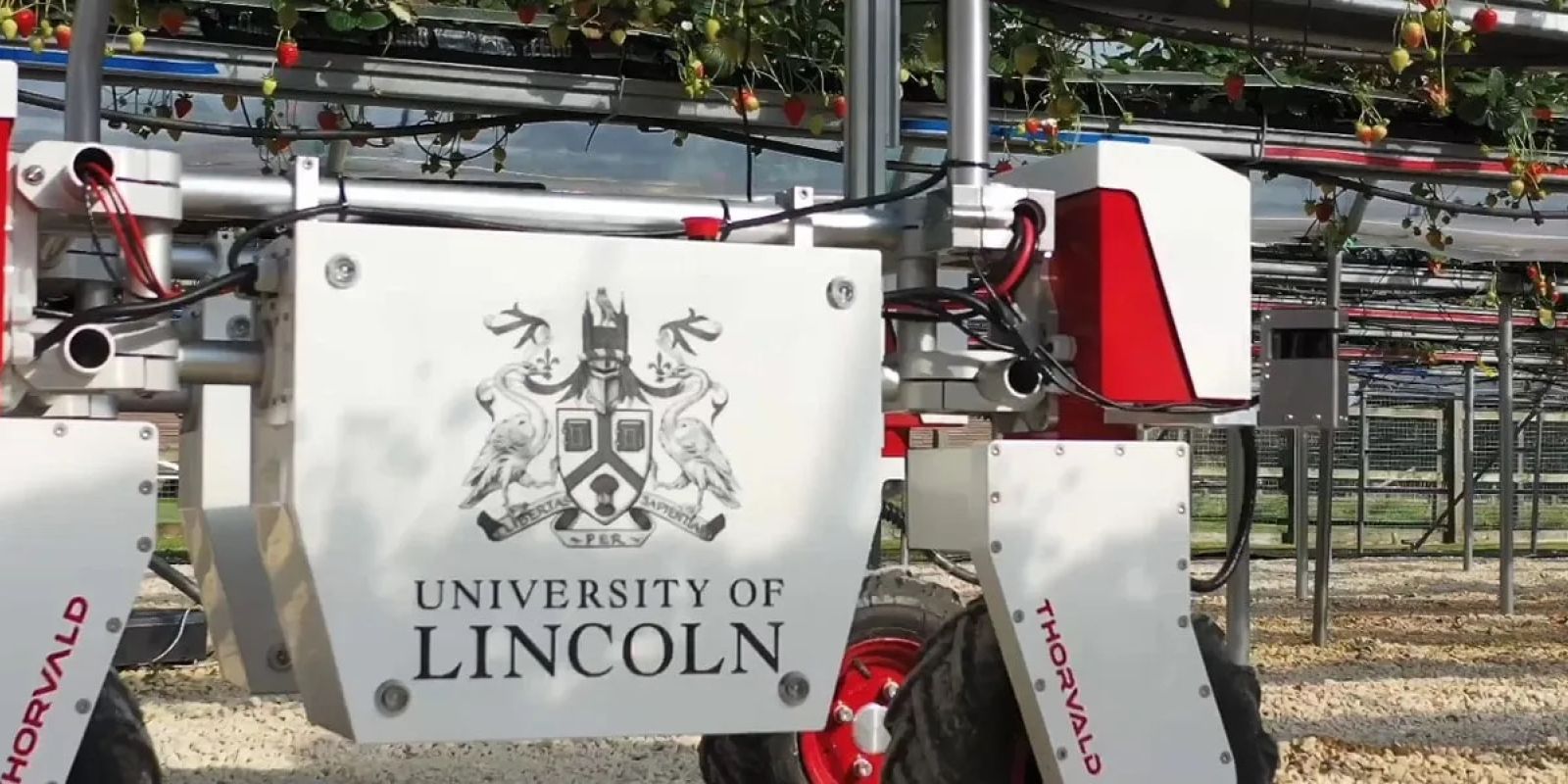
"The relationship isn't new. The tank was invented in Lincoln. The technology that enabled it came directly from agricultural engineering. Even the LIAT agricultural training farm site at Riseholme has its roots in supporting veterans after the Second World War to transition into agriculture.”
“THERE IS NOTHING NOVEL ABOUT BRINGING AGRICULTURE AND DEFENCE TOGETHER IN LINCOLNSHIRE. WE'RE SIMPLY UPDATING THAT RELATIONSHIP FOR THE MODERN ERA."
For Fiona, Lincolnshire's appeal lies in the unique concentration of assets already present within the region.
"When I first looked at Lincolnshire, what struck me was that all the ingredients for success were already there. The agri-tech innovation ecosystem is incredibly strong. And in both sectors, you have industrial capability, end users, researchers, students and public sector partners all within one place. There are very few regions that can genuinely bring together that entire innovation supply chain."
"SO, WE'RE FOCUSING ON AREAS WHERE GREATER LINCOLNSHIRE HAS A GENUINE RIGHT TO WIN."
The Power of Dual-Use Innovation
At the heart of EDGE is the concept of dual-use technologies, innovations that can deliver value across multiple sectors.
Fiona describes her approach. "My work focuses heavily on decision intelligence, which is about turning data into insight and then using that insight to make better decisions. Those applications are just as relevant for a farmer managing land and machinery as they are for defence organisations managing operations. "
Simon sees autonomous systems and robotics as another clear area of crossover.
"What's fascinating is that some of the autonomy technologies being developed within agriculture are now among the most advanced anywhere. The same challenges exist in both sectors. How do machines operate in difficult environments? How do they navigate when GPS isn't available? How do they adapt to changing conditions? Those are shared problems that require shared solutions."
Fiona agrees.
"Farmers and frontline personnel may be working in very different contexts, but fundamentally they're dealing with many of the same operational challenges. They're operating in outdoor environments, managing risks, making time-sensitive decisions and relying increasingly on technology to support those decisions. That's where the real opportunity lies."
Why people matter more than technology
While discussions around innovation often focus on technology, both experts believe people are the true catalyst for growth.
As Simon explains: "The biggest accelerator isn't the technology itself. It's the people. When you bring together highly skilled individuals from agriculture and defence, ideas emerge naturally. Those collisions create innovation. We don't know exactly what will come out of those conversations, but history tells us something exciting always does."
The programme also aims to unlock opportunities for veterans, entrepreneurs and start-ups.
"We want to create pathways for talented people, particularly within our veteran community, to start businesses, create jobs and build careers here in Greater Lincolnshire. Success means people choosing to stay in the county, raising families here, investing here and contributing to thriving communities," states Simon.
"THIS ISN'T JUST A TECHNOLOGY PLAY. IT'S A SOCIAL PLAY."
A Strategic Partnership for Growth
Both Simon and Fiona are clear that EDGE would not be possible without strong collaboration between academia, industry and the public sector. By helping to align strategy, investment and delivery across public and private sectors, the Greater Lincolnshire Combined County Authority, as the convening organisation, is supporting the development of a unified regional approach that strengthens Lincolnshire's voice on the national stage and positions the area as a leader in dual-use innovation.
"One of Greater Lincolnshire's greatest strengths is how effectively the university works with civic partners”, says Simon. “Lincolnshire County Council has shown real leadership through UK Food Valley, helping build a strong agri-food identity for the county. EDGE builds on that foundation while connecting it to the growing defence agenda."
This ambition extends well beyond individual projects.
As Fiona states: "This is about creating critical mass. If we can align strategy, investment and delivery across public and private sectors, we can create something nationally significant. We can strengthen Greater Lincolnshire's voice and become recognised as a place that delivers real innovation and real impact."
Looking Ahead
What does success look like in five or ten years' time?
For Fiona, the answer is clear.
"There's no reason why Greater Lincolnshire shouldn't be recognised nationally and internationally as a centre of excellence for the rapid adoption of emerging technologies across both defence and agriculture. That's absolutely achievable."
Meanwhile Simon believes the region already possesses everything required. “We have the industrial base. We have the research capability. We have the end users. We have the agricultural scale and the defence presence. EDGE gives us the opportunity to bring those communities together and spark innovation. That's where the future lies."
As the UK Food Valley and Lincolnshire County Council continue to champion sector growth across the county, EDGE offers a compelling example of how strategic partnership, place-based investment and shared ambition can unlock the next chapter of innovation for Greater Lincolnshire.
Both agree: "We're taking Lincolnshire's strengths and elevating them for a new generation. That's what makes EDGE so exciting."
As Simon concludes: "A healthy cluster is one where talent moves between businesses, between sectors and between opportunities, but stays within Greater Lincolnshire."
"WHEN YOU BRING TOGETHER THESE TWO GREAT COMMUNITIES, DEFENCE AND AGRI-TECH, PEOPLE COLLIDE, IDEAS COLLIDE, AND INNOVATION HAPPENS. THAT'S THE X-FACTOR."
Lincolnshire EDGE, developed in partnership with the Greater Lincolnshire Combined County Authority and the University of Lincoln, is poised to secure up to £15 million in investment to maximise innovation and growth through technology between Lincolnshire’s Defence & Security and Agri-Tech clusters.
Fiona and Simon from the University of Lincoln, were in discussion with Kate Storey at the UK Food Valley, managed and funded by Lincolnshire County Council.