A GROWING COMMUNALITY WHERE MILITARY AND AGTECH COLLIDE
The future of innovation in Lincolnshire may not be found in a laboratory, a military base or a research farm. Instead it may emerge in the space where all three collide.
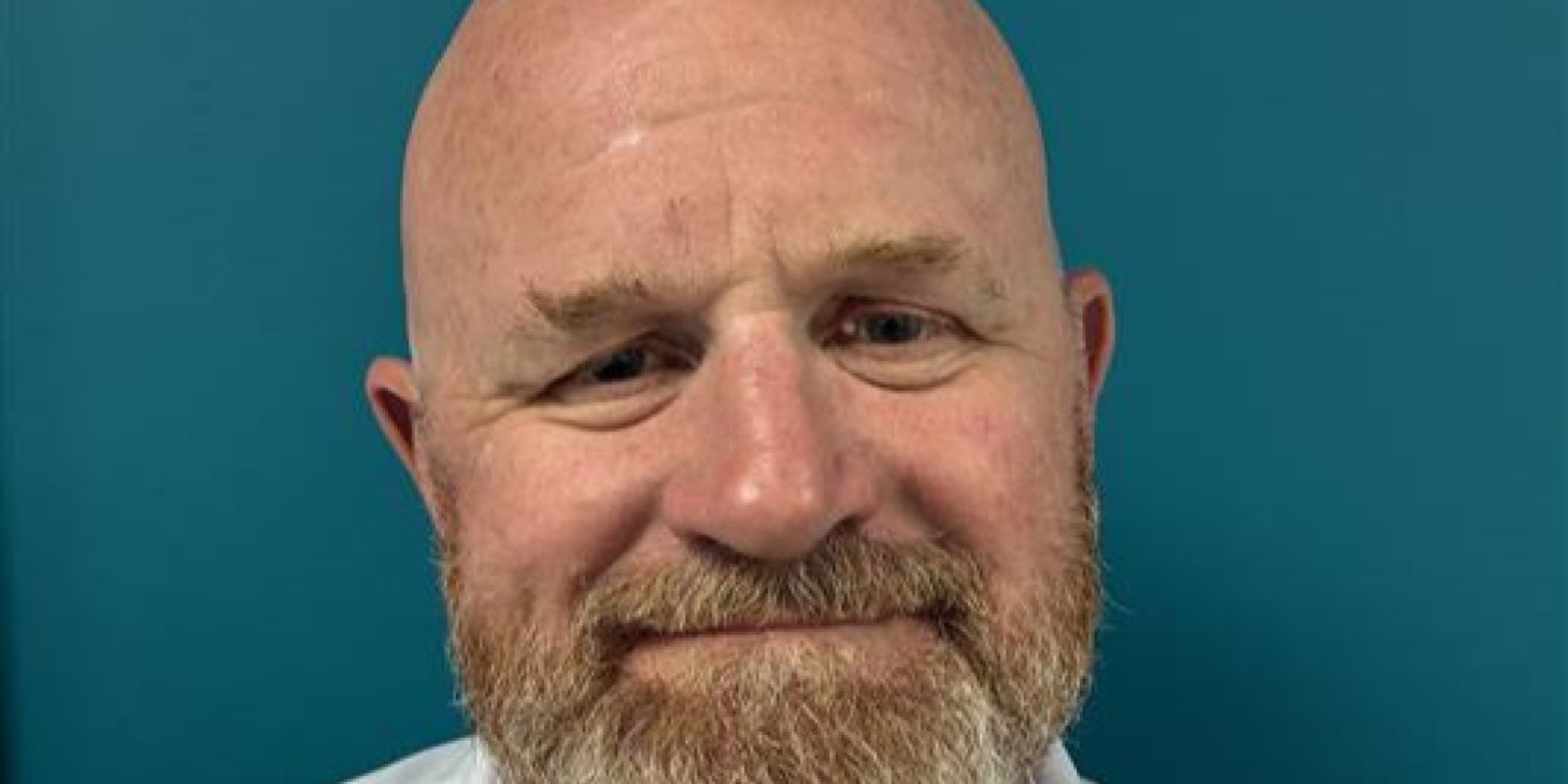
For years, defence and agriculture have been viewed as separate sectors with different priorities, different customers and different routes to market. Yet beneath the surface, they are increasingly confronting the same challenge; how to make better decisions from ever-growing volumes of data. And according to Jim McBride, Finance Director at SRC UK, that shared challenge presents an extraordinary opportunity for Lincolnshire.
"The tools that are being developed to manage this issue are often applicable to all sectors," he says. "I see huge benefits in bringing all this together."
Many would struggle to draw a connection between electronic warfare software and precision agriculture. Yet when viewed through the lens of data, analytics and autonomous technology, the overlap becomes surprisingly obvious.
In fact, some of the same capabilities being developed to help military organisations process vast quantities of intelligence are now beginning to show promise in areas such as food production, land management, and environmental monitoring. Likewise, technologies emerging from agri-tech, around automation and autonomous systems, have relevance far beyond the farm gate.
For Jim McBride, that convergence is one of the most exciting developments taking place anywhere in the region.
"I think they're limitless, if I'm honest," he says of the opportunities created by dual-use technologies. "We're just scratching the surface."
What makes Lincolnshire particularly well placed to capitalise on this moment is that the foundations that are already here.
Lincolnshire hosts one of the UK's strongest defence concentrations, with around 30% of the RAF based in Lincolnshire. It is also home to globally recognised agricultural expertise, world-class research facilities, and a growing network of technology businesses.
Both the UK Food Valley and the Greater Lincolnshire Regional Defence and Security Cluster (GLRDSC), managed and funded by Lincolnshire County Council, were inspired to drive that expertise and growth.
This is one reason why SRC chose Lincoln as its UK base.
The American-owned organisation, which develops advanced defence and electronic warfare capabilities, had worked closely with RAF Waddington before establishing SRC UK in 2019. Its decision to locate in Lincoln was driven not simply by geography but by proximity to expertise, customers, and an ecosystem that continues to deepen.
The growth has been remarkable. Starting with a single employee, SRC UK has expanded to almost 100 staff and has experienced several years of exceptional revenue growth. Yet McBride views that success as only part of a far larger story unfolding across the region.
"All I can see from both the EDGE programme and other programmes and aspirations being driven by the university and partners locally, is that's only going to expand," he says. "It's exciting times."
Perhaps the most fascinating aspect of this emerging ecosystem is that it is being built around collaboration rather than competition.
That may sound straightforward, but in sectors where intellectual property, security requirements and commercial advantage are fiercely protected, creating meaningful collaboration is notoriously difficult.
"It can be difficult, because obviously everyone wants to protect their IP," Jim admits.
The answer, he believes, lies in creating trusted environments where organisations can focus on shared challenges rather than organisational boundaries. That philosophy sits behind DecisionWorks, the University of Lincoln-backed initiative established to bring together industry, academia and public-sector expertise around decision-led artificial intelligence and machine learning.
While much of the national conversation around AI focuses on algorithms and computing power, DecisionWorks is built on a different assumption: innovation happens faster when people with different expertise are encouraged to solve problems together.
"I've long been trying to create a genuine innovation capability that brings together industry, public sector and academia together in a meaningful way," he says. "I think DecisionWorks is an excellent way of doing that."
As an independent partner, the university provides both academic expertise and a trusted space where organisations can collaborate openly. In rapidly evolving fields such as AI and machine learning, access to cutting-edge academic knowledge can often be as valuable as access to capital.
The practical applications are already becoming clear.
One of the first collaborative projects aims to transform how defence analysts process complex information. Rather than relying on manual processes and spreadsheets to bring together disparate data sources, the new approach uses AI and machine learning to identify
and surface the most important insights automatically. Analysts spend less time searching and more time understanding.
It is easy to see parallels elsewhere.
A farmer assessing soil conditions, crop health and weather predictions faces a remarkably similar challenge. An environmental scientist monitoring landscape change encounters the same issue. Different data. Different outcomes. The same fundamental requirement: turning complexity into clarity.
The real opportunity for Lincolnshire may therefore be less about individual technologies and more about transferable capabilities. Intelligence developed in one sector can strengthen another. Success becomes cumulative rather than isolated.
This is also why McBride is such a strong advocate of the Lincolnshire EDGE programme.
"I firmly believe connecting defence and agri capabilities in a meaningful way will give the region significant national relevance," he says.
Lincolnshire already possesses expertise in defence, security, food production, data science and autonomous systems. The challenge is not creating capability; it is connecting existing strengths in a way that generates new value.
Alongside developments at the Lincoln Institute of Agri-Tech (LIAT), DecisionWorks, the Lincoln Science and Innovation Park (LSIP), the UK Food Valley, and the Greater Lincolnshire Regional Defence and Security Cluster (GLRDSC), and potential future activity at Scampton, Jim sees the foundations of something nationally significant taking shape. A connected innovation corridor stretching across Greater Lincolnshire. A place where defence, agri-tech, cyber security, aerospace and AI work alongside one another rather than in silos.
A recent visit by the new Labour Chancellor of the Exchequer; John Healey, a few weeks ago when he was Secretary of State for Defence, enthused that it was the first time that he'd heard local investors, the Lincolnshire Co-operative, the university, and industry all speaking the same language about what was potentially achievable in this region.
This strength lies not in one dominant sector but in the collision of several.
That is why the most inspiring aspect of this story is not the technology itself. It is the willingness of organisations from very different worlds to recognise that they are solving versions of the same problem.
As Jim puts it: "The whole dual-use thing appeals to me. You're building on strengths and then combining them to make it even stronger."
If that vision succeeds, Lincolnshire will not only be known for excellence in defence or agriculture. It will be recognised for something far more valuable: its ability to connect ideas, industries and people in ways that create entirely new opportunities and ecosystems.