A SHIFTING LANDSCAPE IN AGRITECH DRAWS ON MILITARY CAPABILITIES
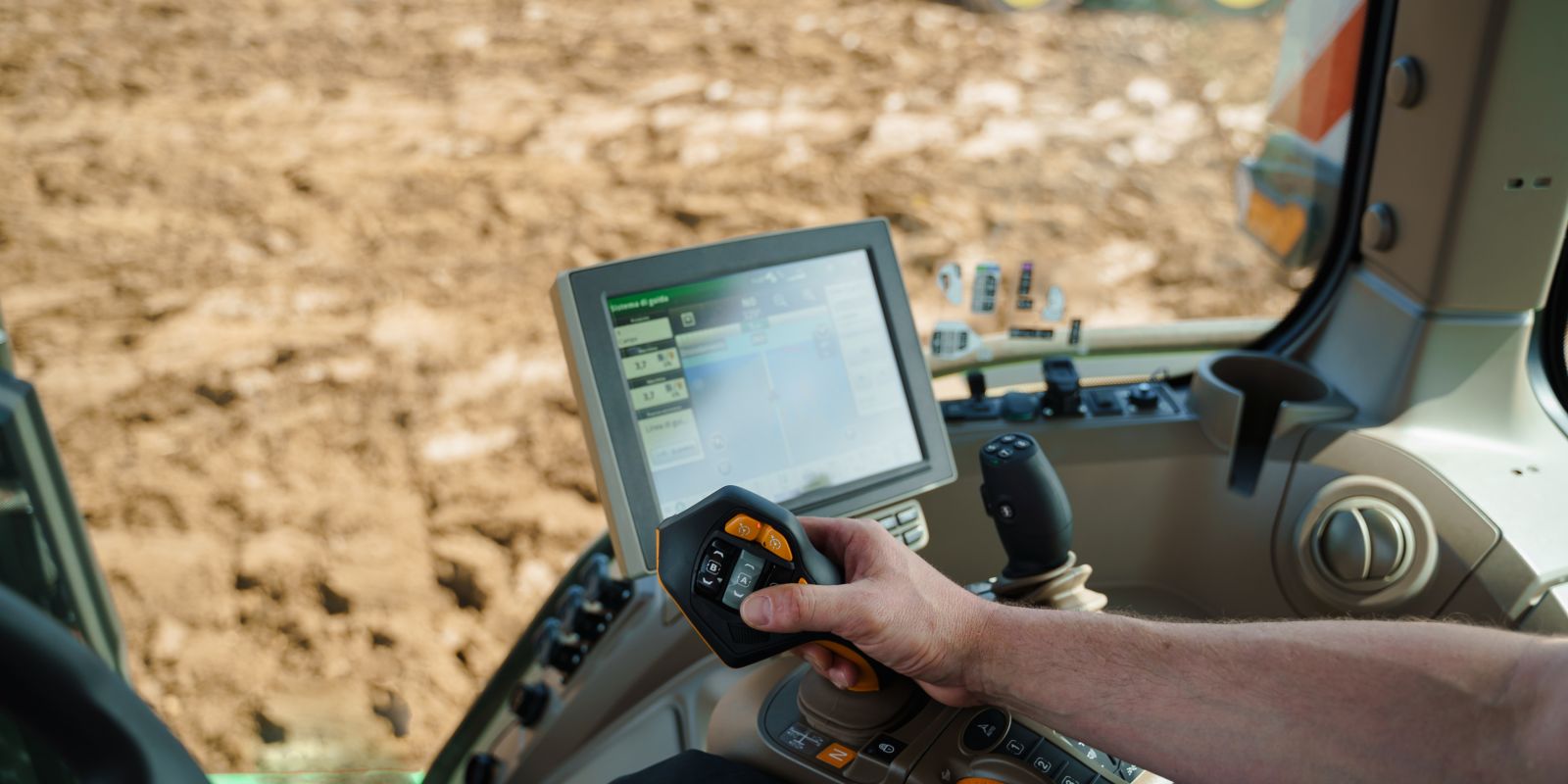
Agriculture is undergoing a technological revolution. What was once an industry driven largely by experience, observation and manual processes is now increasingly powered by connectivity, automation and data-driven decision making.
At the forefront of this transformation is Ben Burgess, one of the UK's leading John Deere dealerships. Heading up the company's precision farming and agri-tech division is Glenn Risebrow, who sees technology not as a replacement for traditional farming knowledge, but as a powerful tool that allows farmers to make better-informed decisions.
"Precision farming has evolved from being an optional extra into a fundamental part of modern farming," he explains. "Today's machinery isn't simply powerful equipment. It's equipped with sophisticated GPS guidance, machine automation, sensors and connectivity that enable operators to work with exceptional levels of accuracy."
While Ben Burgess has long been recognised for supplying premium agricultural machinery, its role has expanded significantly as technology has advanced.
Modern farms increasingly rely on integrated digital ecosystems that connect machinery, agronomic data and business management systems. Platforms such as the John Deere Operations Centre enable farmers to monitor field operations, machine performance, fuel consumption and application records in real time, regardless of whether they are on the farm or in the office.
This connectivity is changing the relationship between dealers and customers.
"As a dealership, our role has changed alongside the technology," Glenn says. "We're now advisers, trainers and technical support specialists as much as machinery suppliers. Our job is to help customers configure systems correctly, interpret data and maximise the value of their investment."
The shift highlights a broader trend within agriculture. Machinery dealerships are increasingly becoming technology partners, helping businesses navigate a rapidly evolving digital landscape.
Before entering agri-tech, Glenn served in the military, a background that he believes has provided a valuable foundation for his current role.
Although defence and farming may appear very different industries, he identifies many shared operational characteristics, particularly around planning, logistics and leadership.
"The military teaches discipline, planning, logistics, problem solving and the ability to make informed decisions under pressure," he says. "Those are all skills that translate directly into modern agriculture."
This is particularly true during time-critical periods such as drilling and harvest when farmers must coordinate machinery, people, and resources simultaneously, while adapting to changing weather conditions.
The increasing role of technology also creates similarities between the two sectors. Modern military operations rely heavily on positioning systems, communications networks and automation, while agriculture is following a similar path through GPS guidance, machine connectivity and autonomous capabilities.
Equally important is the human aspect of technological change.
"Introducing new technology isn't simply about installing software or delivering a machine. It's about helping people understand how to use it effectively and building confidence in change."
While Ben Burgess is not directly developing dual-use technologies, Glenn believes agriculture will continue to benefit from innovations emerging from sectors such as defence, aerospace and autonomous vehicle development.
Technologies including high-accuracy satellite positioning, machine vision, artificial intelligence and autonomous navigation already have applications across multiple industries.
As farms face increasing pressure to improve productivity while addressing labour shortages, these technologies are expected to play an increasingly important role.
"Autonomous machines and intelligent decision-support systems will become increasingly important," Glenn notes. "The transfer of technology between industries will almost certainly accelerate that development."
However, he emphasises that successful innovation in agriculture depends on practical implementation, reliability and safety in real-world farming conditions.
Perhaps the most significant driver of change is the growing value of data.
Traditionally, farmers have relied on years of experience and local knowledge to make key management decisions. While those skills remain essential, digital technologies now provide additional layers of information that support more precise decision making.
Modern agricultural machinery continuously generates operational data, enabling businesses to assess machine efficiency, fuel consumption, application rates and field performance. When combined with agronomic information such as yield mapping, soil analysis and crop performance data, farmers gain a much deeper understanding of their operations.
Platforms that consolidate this information allow farm managers to move beyond isolated data points and develop a comprehensive picture of business performance.
Looking ahead, Glenn believes artificial intelligence will become increasingly influential.
"Future systems won't simply present information," he says. "They'll identify trends, highlight potential issues before they become problems and provide recommendations based on historical performance, weather forecasts and real-time field conditions."
The result will be more efficient use of costly farm inputs such as fertiliser, seed and crop protection products, while improving operational consistency and reducing waste.
As technology continues to advance, the future of agriculture is expected to become increasingly interconnected.
Rather than operating as standalone assets, machinery, agronomy platforms and business management systems will work together as part of a fully integrated farming ecosystem. The focus will move from individual technologies to connected decision making across the entire farm business.
For companies such as Ben Burgess, this means continuing to evolve beyond traditional machinery support and helping customers unlock the full potential of digital farming systems.
Ultimately, Glenn believes the future of agri-tech is not about replacing farmers, but empowering them.
"The knowledge still sits with the farmer," he says. "Technology simply provides a level of visibility and precision that wasn't possible ten years ago."
In an industry facing the dual challenges of improving productivity and sustainability, that combination of human expertise and technological innovation could prove transformative.
Glenn Risebrow submitted responses posed by Jess Foster of the UK Food Valley, managed and funded by Lincolnshire County Council.