BRITAIN’S BOLDEST CROP? INSIDE LINCOLNSHIRE’S OLIVE INVESTMENT
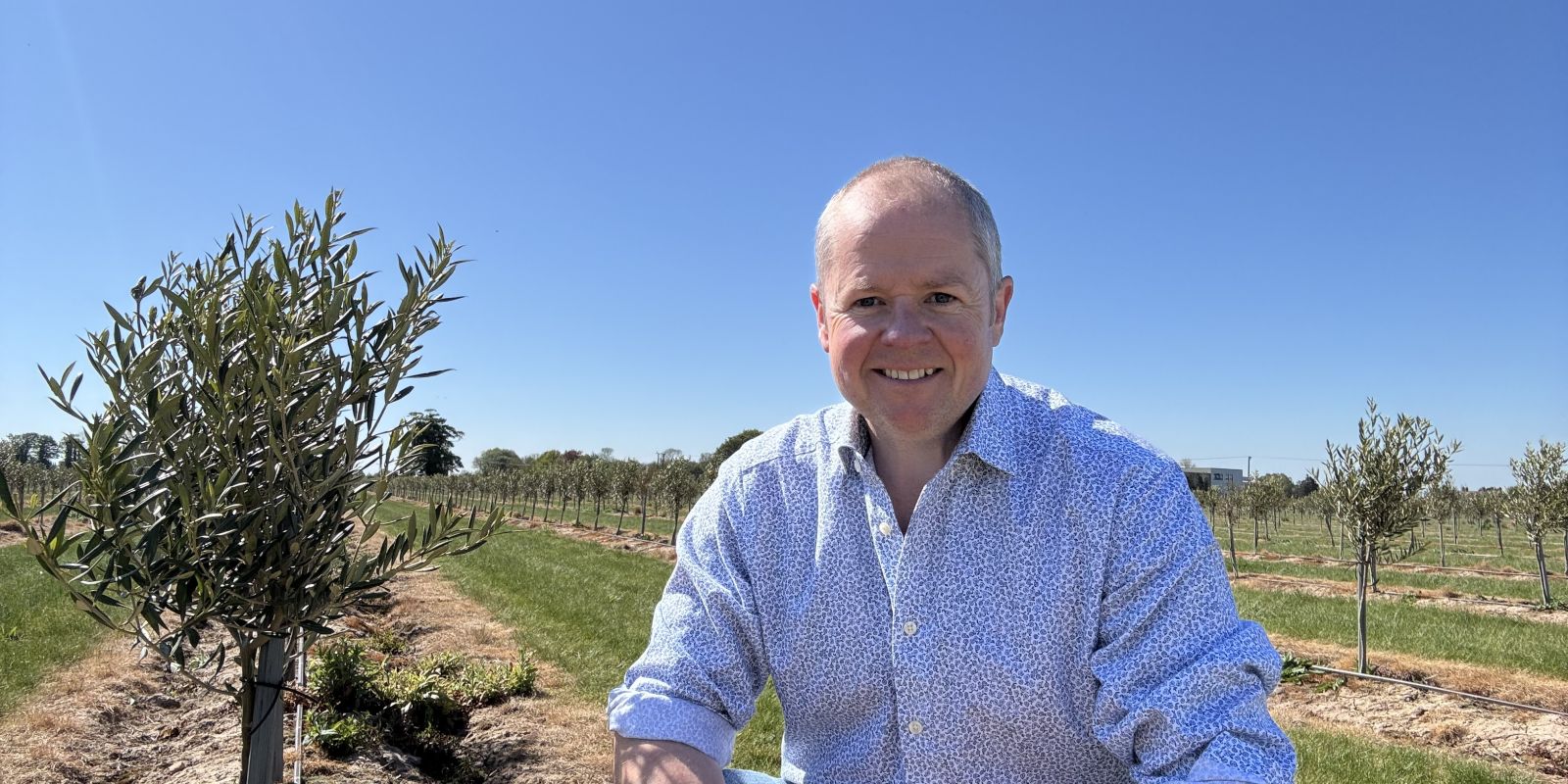
On a silt land farm in South Lincolnshire, a not so quiet agricultural experiment is underway - one that could signal a step change in British farming. Olive trees, more commonly associated with Mediterranean hillsides, are now being cultivated in what is the most northerly olive grove in the world. For farmer David Hoyles, this isn’t a novelty project. It’s a calculated, long-term investment shaped by weather resilience, market pressures, and a belief that the UK must rethink how it supports its growers.
A Climate-Driven Bet on the Future
‘We’ve been experiencing warmer, drier conditions on the traditional family farm for many years,’ Hoyles explains. ‘We could sort out the drier situation by investing in increased reservoirs, but the hotter conditions were more of a challenge.’ That shift in climate pushed him to look beyond traditional crops. ‘I came across some crops in Italy on soil very similar to ours and thought, why are olives growing on this land?’ The result: a bold diversification into olives, which began 5 years ago.
Not Just Weather: Control, Succession, and Value
Asked what else drove Hoyles to his decision he responded; ‘There were three main reasons. One was a fluctuating climate. The second was owning my own brand - and not being a commodity producer. The third was succession planning.’ That shift - from price-taker to brand owner, is critical. ‘People want British food. And they like novel, new, interesting projects.’
A Considered, Long-Term Investment
At present, production costs remain unsustainably high. ‘Cost per bottle is currently extremely high,’ Hoyles says. Yields are expected to improve, but major challenges remain - a shorter growing season and lower oil content than Mediterranean counterparts, with the addition of the extreme weather risk. ‘We’re never going to compete yield-wise, or cost of production-wise. It’s always going to be a quality niche product.’
Infrastructure: Water and Energy as Make-or-Break Factors
Water is a critical issue. ‘We’re sited below sea level,’ says Hoyles. ‘Salinity levels are a big problem, and if we don’t use it, it simply flows out to the North Sea.’ Hoyles argues that policy must reflect regional realities: ‘A blanket approach is not the right solution here. We should be viewed region by region.’ Energy is another pressure point. ‘We’ve now got massive standing charges - just connecting to the grid is very expensive and we are looking at other farm generated solutions.’
What Government Must Do
Hoyles outlines clear priorities: regional water policies, recognition of horticulture as an energy-intensive sector, creating a level playing field with international competitors, and long-term policy certainty. ‘Olive trees take 20 or 30 years to reach maturity. We need at least 10-year certainty and direction.’
The Bigger Risk: Offshoring Food and Impact
Without change, he warns, the UK risks losing both production and environmental control across a wide range of crops. ‘We’re just going to offshore our produce and our environmental concerns. Where farmers in the UK can't grow their crops efficiently, economically, or viably, then they stop, and the processing factories close’. Meanwhile consumers still want that product and so it becomes imported from overseas. ‘Oil seed rape is an example of this’, states Hoyles. ‘Crushing facilities closed because farmers couldn't grow the crops because neonicotinoids were banned. So we now import them from countries where they're not’. We are in danger of closing down much of our industry and homegrown production in favour of an increased carbon footprint at the expense of our own security by insisting on blanket policies.
A Niche Today: A Signal for Tomorrow
Olives may remain niche, but they signal a broader shift in UK agriculture. ‘Like many others, we’re investing to mitigate some of the risks across climate resilience and profitability,’ says Hoyles. The question is whether policy will keep up with innovation. Arguably, the answer must be yes if we are to advance UK food security rather than reliance on costly and environmentally expensive imports.
David was interviewed by Kate Storey of the UK Food Valley, managed and funded by Lincolnshire County Council