FARMING FOR THE FUTURE: MULTIPLE LAND USE OFFERS GOVERNMENT SOLUTIONS
The future of British farming is undergoing a fundamental transformation - not just in how food is grown, but in how land itself is valued.
At the centre of this transformation is a simple but radical idea: the same hectare of land can produce food, store water, generate energy, capture carbon, and even improve national health outcomes. In North Lincolnshire, one organic farming business is demonstrating what that future could look like - combining innovation, investment and circular thinking at a scale that challenges both industry norms and government policy.
James Brown is the owner of Pollybell Farms, one of the UK’s leading organic farming businesses, operating across North Lincolnshire, North Nottinghamshire and South Yorkshire.
He began transitioning the farm to organic production in 1997 and has since overseen its growth into a large-scale producer of fresh vegetables, grown and packed on-site for UK retailers. His approach integrates traditional organic principles with advanced innovation and technology.
Alongside farming, James has played a key role in developing agri-tech solutions, notably in robotics and automation, including technologies that reduce reliance on herbicides and enable plant-level crop monitoring. He has also led significant investment supported by grants into research and development with over £30 million invested across projects in the wider business ecosystem, to drive improvements in productivity, sustainability and resource efficiency.
His work increasingly focuses on integrated land use, combining food production with water storage, renewable energy generation and circular economy systems such as biomass and biochar and is currently advancing large-scale reservoir development projects designed to improve water security, reduce flooding and support industrial growth.
“The one thing organic farming teaches you is how to look at things through a circular approach. That’s what you have to do in order to be successful,” explains James.
Despite steady recovery since the 2008 financial crisis which saw organic lines delisted and demand fall, the UK still lags behind Europe and North America in organic adoption. Yet there is a clear shift underway. Regulatory pressure on agrochemicals, changing consumer preferences, and economic drivers are pushing both organic and conventional growers toward similar systems. The fact that around 50% of customers accessing Earth Rover’s robotic weeding technology are conventional farmers signals a convergence that could accelerate sector growth.
Globally, around $40 billion is spent annually on herbicides, with approximately one million tonnes applied each year. Against that backdrop, robotics that eliminate weeds without chemicals and simultaneously collect plant-level data offer both environmental and economic disruption.
“You don’t have technology looking for a problem, you design the solution from the problem itself,” James says.
This approach reframes productivity. Instead of measuring yield purely in tonnes per hectare, the focus shifts to how efficiently every input - seed, nitrogen, water - is converted into saleable produce. The result is a system where sustainability and profitability become aligned, rather than competing objectives.
This relentless focus on efficiency comes into its own with water management - arguably one of the most pressing challenges for UK agriculture. Yet, in James’s view, the issue is often misunderstood.
“The UK doesn’t have a water problem. We have a water management problem.”
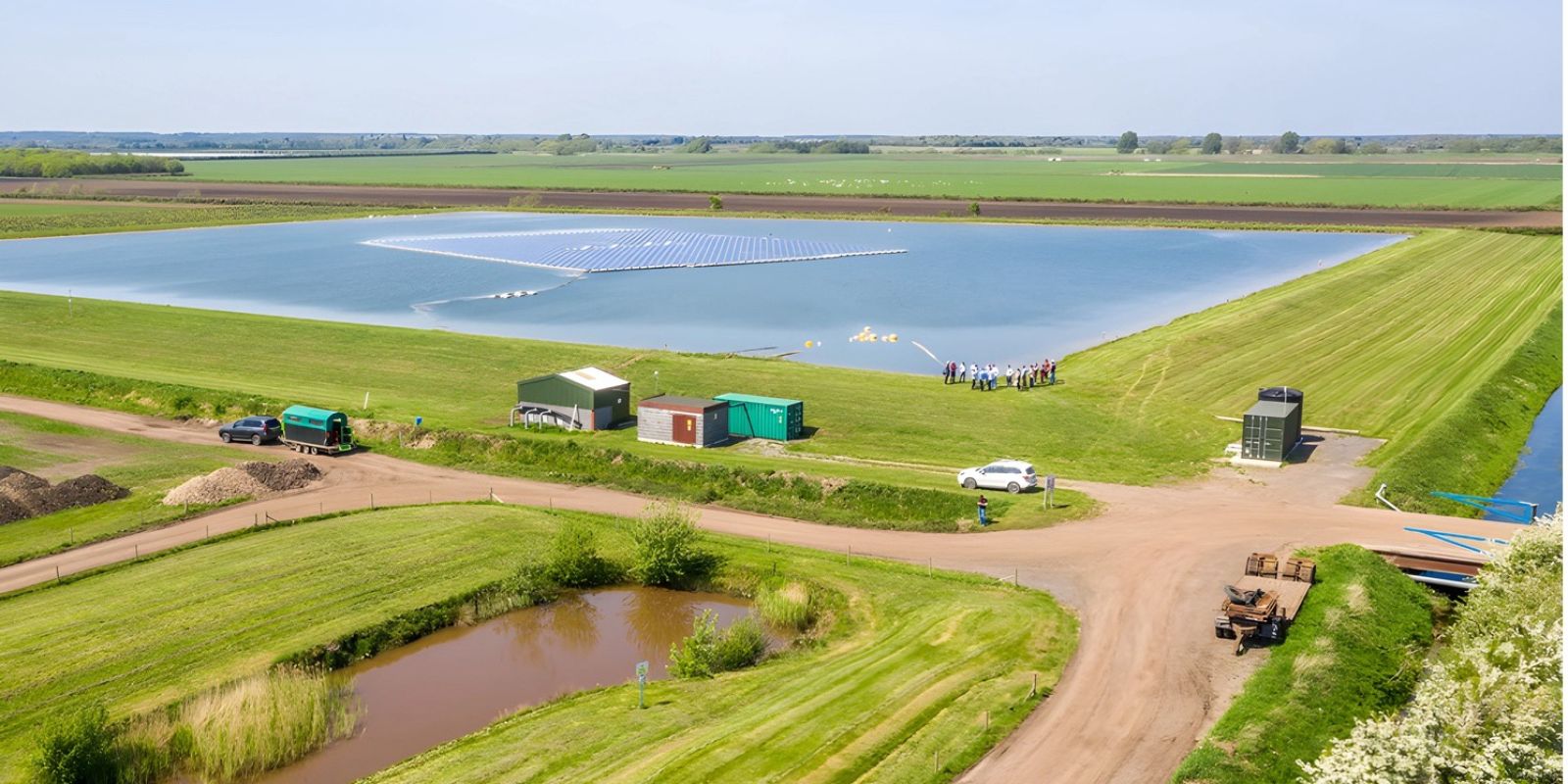
On low-lying farmland, the paradox is stark: months are spent removing excess water, followed by periods where crops suffer from shortage. The response has been long-term, infrastructure-led investment. On the Pollybell site, a farm reservoir, combined with a 12 kilometre irrigation main, now enables multiple irrigators to operate simultaneously, ensuring resilience during dry periods.
But the real innovation lies in what came next - stacking additional value onto that same piece of land. Floating solar panels were installed on the reservoir shortly after construction, prompting a wider rethink of how water, energy and production systems could be integrated and transforming a single-purpose asset into a dual-use system producing both water security and renewable energy.
“I’ve taken the land out of production to give me water security” explains James. “What else can I do with it? Let’s stack it. Let’s make it sweat.”
This thinking reaches its full expression in a comprehensive major reservoir and energy-water management system, now in development. Designed to intercept water that would otherwise contribute to flooding, the scheme will store and redistribute it for agricultural, industrial and environmental use.
The significance of this goes far beyond farming alone. In parts of the Humber region, lack of water availability is a direct constraint on industrial expansion. By capturing excess winter flows otherwise pumped to sea, and reallocating them to where they are needed, the project effectively converts a flood risk into an economic asset.
What makes the model particularly innovative is its integration with the surrounding landscape. Wetland areas covering several hundred acres will filter water naturally before it
enters the reservoir, improving quality while delivering biodiversity gains. That same biomass from wetland systems is then fed into energy production, linking water, ecology and energy into a single circular system.
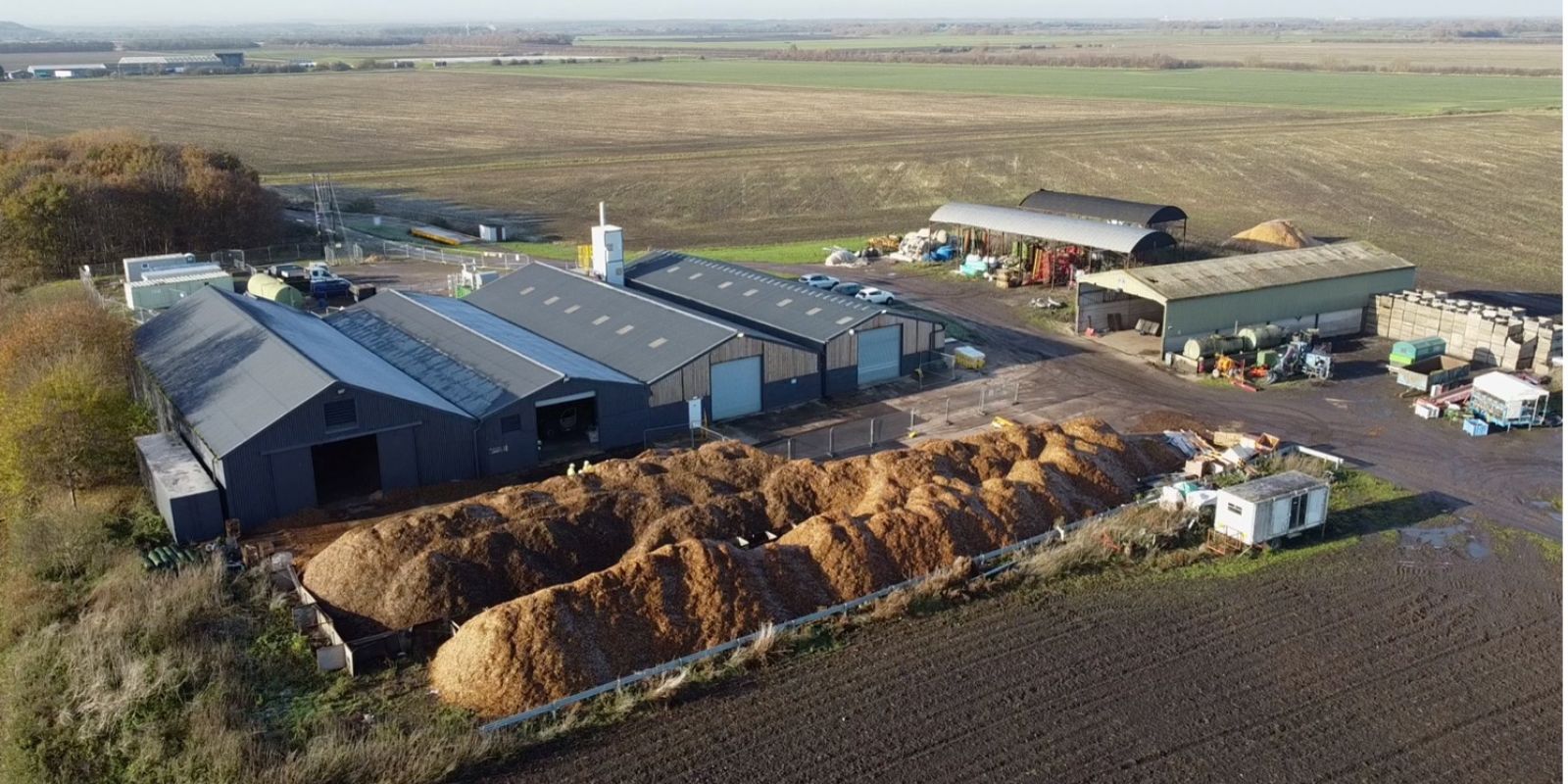
The business is investing heavily in energy independence through pyrolysis technology, converting biomass into both liquid fuels and biochar. Through thermal decomposition without oxygen, plant material is transformed into solid carbon plus hydrogen and carbon monoxide, which can then be recombined into fuels ranging from LPG substitutes to aviation fuel equivalents.
“Rather than digging fuels out of the ground, we are growing them from today’s carbon dioxide and circling it round.”
This multi-layered land use reflects a broader shift: farmland is no longer being treated as a single-output system, but as infrastructure capable of delivering multiple public goods simultaneously.
Biochar is emerging as a critical component in this system. Described as acting like ‘mini Velcro’ within the soil, it improves the soil’s ability to retain both water and nutrients. This has multiple cascading benefits such as reducing the amount of fertiliser required, improving drought resilience, and increasing the proportion of nutrients taken up by crops rather than lost to the environment.
This positions agriculture not just as a contributor to emission reductions, but as an active part of carbon removal strategies. The same material also has potential industrial uses, including applications in steelmaking as a lower-carbon alternative furnace input, and is currently being used in trials being undertaken between Pollybell and British Steel.
Yet perhaps the most striking aspect of this vision is its implication for public policy. James argues that farming itself holds the key to solving many of the government’s biggest challenges - from climate volatility to food security to healthcare.
“Farming and land management are fundamentally the solution to a lot of government policy objectives.”
Yet perhaps the most powerful idea emerging from this model is its implication for public health. In a powerful reframing, he suggests that agriculture should be viewed as the true frontline of public health.
“Agriculture is the health service. The NHS is the illness service.”
The logic is compelling: healthier food systems lead to healthier populations, lead to reduced long-term pressure on healthcare services. Combined with environmental benefits and energy production, the case for integrated land use becomes not just economic, but societal.
This analogy reframes the role of farming entirely. Agriculture can shape the conditions that determine whether people become sick in the first place. Diet is one of the most significant determinants of long-term health outcomes, and the way food is produced directly influences nutritional quality.
In this sense, investment in food systems, particularly those producing fresh, nutrient-rich crops, can be seen as preventative healthcare spending. Producing good, healthy food is not just an agricultural objective, but a public health strategy that could reduce long-term pressures on healthcare services.
The analogy becomes even more compelling when layered with the wider capabilities of modern farming systems. The same land producing healthy food can also deliver cleaner water, reduced emissions, renewable energy and economic growth. In effect, agriculture becomes a platform for preventative solutions across multiple government priorities - not just health, but climate, environment and infrastructure.
“Farming and land management are fundamentally the solution to a lot of government policy objectives,” argues James.
The challenge is not technical feasibility. These systems are already being demonstrated - but require enabling scale. Whist programmes such as Innovate UK help de-risk early-stage innovation, regulatory frameworks and planning processes can slow deployment.
The message from industry is clear: the opportunity exists, but it requires alignment between policy and practice.
“Allow businesses to see an opportunity, let them make a profit, and let them get on with it.”
James believes the UK Food Valley and the wider East Midlands are uniquely positioned to lead this transformation. With world-class produce already recognised internationally with conditions comparable to leading agricultural regions such as the Netherlands, the foundation is strong. The quality of UK produce is already internationally recognised; the next step is scaling innovation and integrating systems at pace.
What is emerging is a new blueprint for agriculture. One where land is no longer single-purpose, but a dynamic asset delivering food, water, and energy security, environmental benefits, and public health outcomes simultaneously.
And in that future, the most important healthcare system in the country may not be found in hospitals, but in the fields.
James was interviewed by Kate Storey at the UK Food Valley, managed and funded by Lincolnshire County Council.