FOOD SECURITY = NATIONAL SECURITY
News
As conversations around defence increasingly focus on resilience, infrastructure and preparedness, food security is becoming recognised as a critical element of national security.
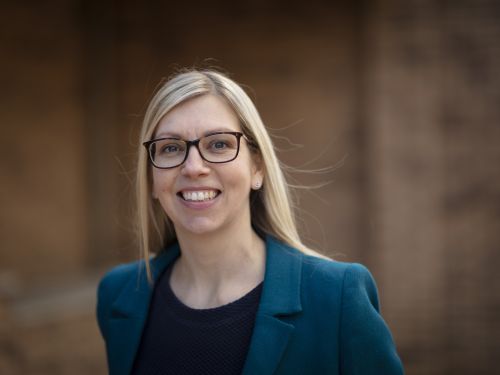
Few people understand these connections better than Dr Louise Manning, a food systems specialist whose career has spanned industry, academia, policy and farming.
Louise's route into the food sector began unexpectedly. After studying Chemistry and Biochemistry in London, she moved to Herefordshire and took a laboratory role with a cider company, simply because this was the only scientific job she could reach by bus.
"I started on £85 a week," she recalls. "A year later I was running the laboratory. "
Her career later took her into academia, where she became Professor of Sustainable Agri-Food Systems at the University of Lincoln and worked extensively on food safety, supply chains and sustainability. Today, she combines consultancy, policy work and advocacy for farmers and rural communities.
Reflecting on her journey, Louise emphasises the importance of lifelong learning:
"You are the best person to invest in. Careers don't always move in a straight line. Every role develops skills that are valuable later on."
Food security is often associated with food production, but Louise argues that today's risks are much broader.
"The two biggest pressures on businesses and on consumers at the moment are the cost of living crisis and the cost of tax crisis," she explains.
Consumers continue to feel pressure on household budgets, while businesses throughout the food supply chain face rising costs and growing demands to invest in sustainability, adaptation and resilience measures.
At the same time, climate change is creating entirely new challenges. Rather than focusing solely on reducing emissions, Louise believes equal attention must now be given to adaptation.
"We need to accept that conditions are changing and start adapting our businesses now."
She points to recent heatwaves that caused refrigeration failures in supermarkets, highlighting the vulnerability of infrastructure that was designed for a different climate. Similar challenges are emerging across farming, processing, logistics and retail.
"The question isn't whether we need to adapt. It's how quickly we can do it."
One of the most striking themes from the discussion was the growing overlap between food security and cyber security. As food supply chains become increasingly digitised, they also become more vulnerable to disruption. Louise highlighted several high-profile examples where cyber attacks have caused significant operational and financial damage across major organisations.
Food businesses are particularly exposed because modern supply chains depend on interconnected software, automated logistics systems and digital communications networks. In one well-known example, global meat processor JBS suffered a ransomware attack that disrupted operations across multiple continents. Given the company's scale within global meat supply chains, the incident demonstrated how disruption to a single organisation can have far-reaching consequences.
Similarly, attacks on logistics providers can create problems well beyond the organisation directly affected. Louise referenced cases where digital systems became so compromised that operators struggled to access sites, move goods or maintain normal operations.
"What we've done is create highly efficient systems," she says. "But efficiency can also create vulnerability."
The challenge is not limited to cyber crime. Food businesses are also required to consider product tampering, organised crime, insider threats, fraud and physical disruption through comprehensive food defence and business continuity planning. Despite these challenges, Louise is optimistic about the opportunities emerging from innovation.
Technologies originally developed for defence applications are increasingly finding valuable uses in agriculture and food production. Drone technology provides a good example. Advances accelerated through defence investment have reduced costs and increased accessibility for farmers. Today, drones can be used for precision spraying, crop monitoring and land management, often at a fraction of the cost of traditional equipment.
"Technology is lowering barriers to entry," Louise explains. "People can start businesses with far less capital than was previously possible."
Robotics, artificial intelligence, geolocation systems and smart monitoring technologies are also helping businesses improve efficiency while strengthening security and resilience.
Importantly, these innovations are not only for large-scale operators. Smaller businesses are increasingly benefiting from technologies that help them reduce costs, improve productivity and retain more value within local supply chains.
Louise believes Lincolnshire is exceptionally well positioned to contribute to the future of food security. With its concentration of food production, manufacturing expertise, research capability and growing focus on defence-related innovation, the county is
uniquely placed to develop technologies that serve both national food security and national defence.
She highlights the University of Lincoln's strengths in agri-technology, artificial intelligence and decision-support systems, as well as the opportunities created through industry collaboration across Greater Lincolnshire.
"Lincolnshire has a fantastic opportunity to develop technologies that support both food security and national security," she says.
However, continued collaboration between industry, researchers and policymakers will be essential to ensure innovation remains practical, affordable and responsive to rapidly changing threats.
Ultimately, Louise believes food security must be viewed as a core component of national security. Whether the threat comes from climate change, cyber attacks, supply chain disruption, or geopolitical instability, the ability to provide safe, affordable and nutritious food remains fundamental to a functioning society.
As governments, businesses and communities consider future defence priorities, food systems cannot be overlooked.
As Louise concludes, "What lies at the heart of national food security is recognising that we're in a fast-changing world. We need food systems that are agile, resilient and able to continue providing safe, affordable and nutritious food to the communities we serve."
For UK Food Valley, that challenge also presents an opportunity: to combine world-leading agri-food expertise with emerging technologies, helping to build a more secure and resilient future for the UK.
Louise Manning was interviewed by Jess Foster at the UK Food Valley, managed and funded by Lincolnshire County Council.