HOW SAGA ROBOTICS IS BRINGING AI, AUTOMATION AND SUSTAINABLE FARMING TOGETHER
-24-1_1600_800_80_s_c1.jpg)
From defence engineering and warehouse robotics to autonomous crop care, Damian Flynn's career has been defined by solving complex challenges.
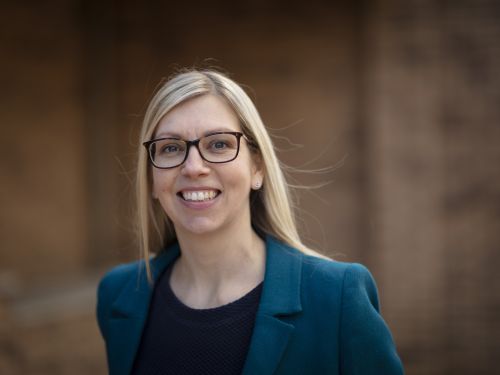
As Chief Product Officer at Saga Robotics, he is now helping transform agriculture through cutting-edge robotics, artificial intelligence and sustainable crop management, drawing on defence technologies to cross -fertilse agritech robotics.
When Damian reflects on his career, there is a consistent theme running throughout: understanding systems, solving real-world problems and applying technology where it can have the greatest impact.
After studying Mechanical Engineering at Aston University and completing a Master's degree in Computer-Aided Mechanical Engineering, Damian began his career in the defence sector. Working on armoured vehicles and military equipment gave him a unique opportunity to understand the entire product lifecycle, from design and testing through to deployment and long-term support.
"It taught me that a system is much more than a piece of equipment," he explains. "It's the people, the training, the support, the maintenance and everything else needed to make that system successful."
Alongside his work, Damian completed a PhD in Systems Engineering, learning how technology, people and processes interact to create effective solutions. That systems thinking would later take him into the world of robotics.
After a decade in defence, Damian joined Ocado Technology, where he spent seven years leading the development of robotic systems for highly automated warehouses. The move represented a dramatic change of environment, but many of the principles remained the same.
Modern warehouses are increasingly driven by robotics, automation and data. Damian led teams responsible for developing systems that allow robots to store, retrieve, pick and pack products efficiently, helping to solve one of the most complex logistics challenges in the world: online grocery fulfilment. It was there that he saw first-hand how automation could transform entire industries.
Three years ago, that experience led to another major challenge when he joined Saga Robotics, an agri-tech company with a mission to bring similar levels of automation into agriculture. Agriculture faces a unique set of pressures. Labour shortages, environmental concerns, rising
costs and increasing restrictions on chemical treatments are creating significant challenges for growers across the UK and beyond.
For Saga Robotics, these challenges represent an opportunity.
The company's autonomous robot, known as Thorvald, uses UVC light technology to combat crop diseases such as powdery mildew, downy mildew and botrytis. Rather than relying on manually applied chemical sprays, Thorvald travels autonomously through crops, applying targeted UVC treatment that disrupts disease spores before they can develop.
"Growers want to reduce chemical usage," Damian says. "Chemicals are expensive, difficult to apply and can have serious unintended environmental impacts. UVC provides an effective alternative without leaving any residue on the crop."
The technology is already being used in crops including strawberries, blueberries, raspberries, wine grapes and cucumbers, helping growers improve sustainability while reducing reliance on fungicides.
While automation has transformed warehouse operations, applying the same principles to agriculture is far more challenging.
"Warehouses are highly controlled environments," Damian explains. "On farms you have muddy ground, slopes, dust, rain, changing weather conditions, workers, machinery and often limited connectivity. It's one of the most complex environments for autonomous systems."
Much of which is shared with working in a defence or military environment.
Developing robots that can operate reliably in these conditions has required years of innovation in navigation, sensing, machine vision and autonomous decision-making. Yet it is these advances that are making agriculture a proving ground for some of the most advanced robotics technologies in the world.
Beyond disease control, Saga Robotics is increasingly focused on another valuable asset: data. Because Thorvald moves through crops multiple times each week, it can continuously collect information about plant health, fruit development and crop performance. Using AI and machine learning, Saga's systems can analyse images collected by the robots to assess crop conditions, identify potential issues and predict future yields. For growers, this information provides valuable insight that would otherwise be difficult, costly or impossible to collect manually.
"Most farmers can't physically inspect every plant across such large growing areas," Damian says. "Our robots become automated scouts, highlighting issues early and giving growers better information to make decisions."
The data can help with everything from labour planning and harvesting schedules to identifying irrigation issues or pest outbreaks before they become major problems.
Although Saga Robotics operates internationally, Lincolnshire plays a central role in its innovation activity. The company's strong relationship with the University of Lincoln has helped provide access to highly skilled graduates, research expertise and collaborative opportunities that support product development. Damian believes Lincolnshire is uniquely positioned to become a leading agri-tech hub for the UK.
"There are very few places that combine world-class agricultural expertise with strong engineering and robotics capability," he says. "Lincolnshire has both."
Saga Robotics was amongst the organisations supporting proposals linked to the Lincolnshire EDGE Fund, including ambitions to create stronger agri-tech collaboration and innovation facilities within the county. Damian sees enormous value in creating an environment where growers, researchers, investors and technology businesses can work together, share knowledge and accelerate innovation.
Nowhere else in the country does the interface between two expert clusters in both agri-tech and defence align than in Lincolnshire, the cornerstone of both a growing regional defence cluster born from decades of military heritage, and the UK Food Valley which is establishing a Top 10 Global Cluster.
"If you're in motorsport, you go to Silverstone. If you're in aerospace, you go to Bristol. Agriculture deserves a similar centre for innovation, and Lincolnshire is a natural place for that”.
Looking ahead, Saga Robotics is continuing to expand Thorvald's capabilities. Alongside disease treatment and crop monitoring, the company is exploring ways robots could support additional farm tasks such as distributing beneficial insects, weeding, mowing and crop management activities.
The long-term ambition is to create a flexible autonomous platform capable of performing multiple tasks throughout the growing season. At the same time, advances in AI are opening new possibilities for automated decision-making, fault diagnosis and precision crop management.
For Damian, technology alone is not the goal. Instead, the focus remains on helping growers improve productivity, sustainability and food security while reducing reliance on finite resources.
"As a company, we're dedicated to helping growers produce food in a way that is cleaner, more sustainable and more resilient," he says. "Technology can play a huge role in achieving that."
As robotics, automation and AI continue to reshape agriculture, Saga Robotics is demonstrating how innovation, sustainability and food production can work hand-in-hand, and is poised to collaborate with defence technology businesses to accelerate dual use solutions across sectors with Lincolnshire firmly at the heart of that journey.
Damian Flynn was interviewed by Jess Foster at the UK Food Valley, managed and funded by Lincolnshire County Council.