How UK Food Valley is Building a Global Food Cluster
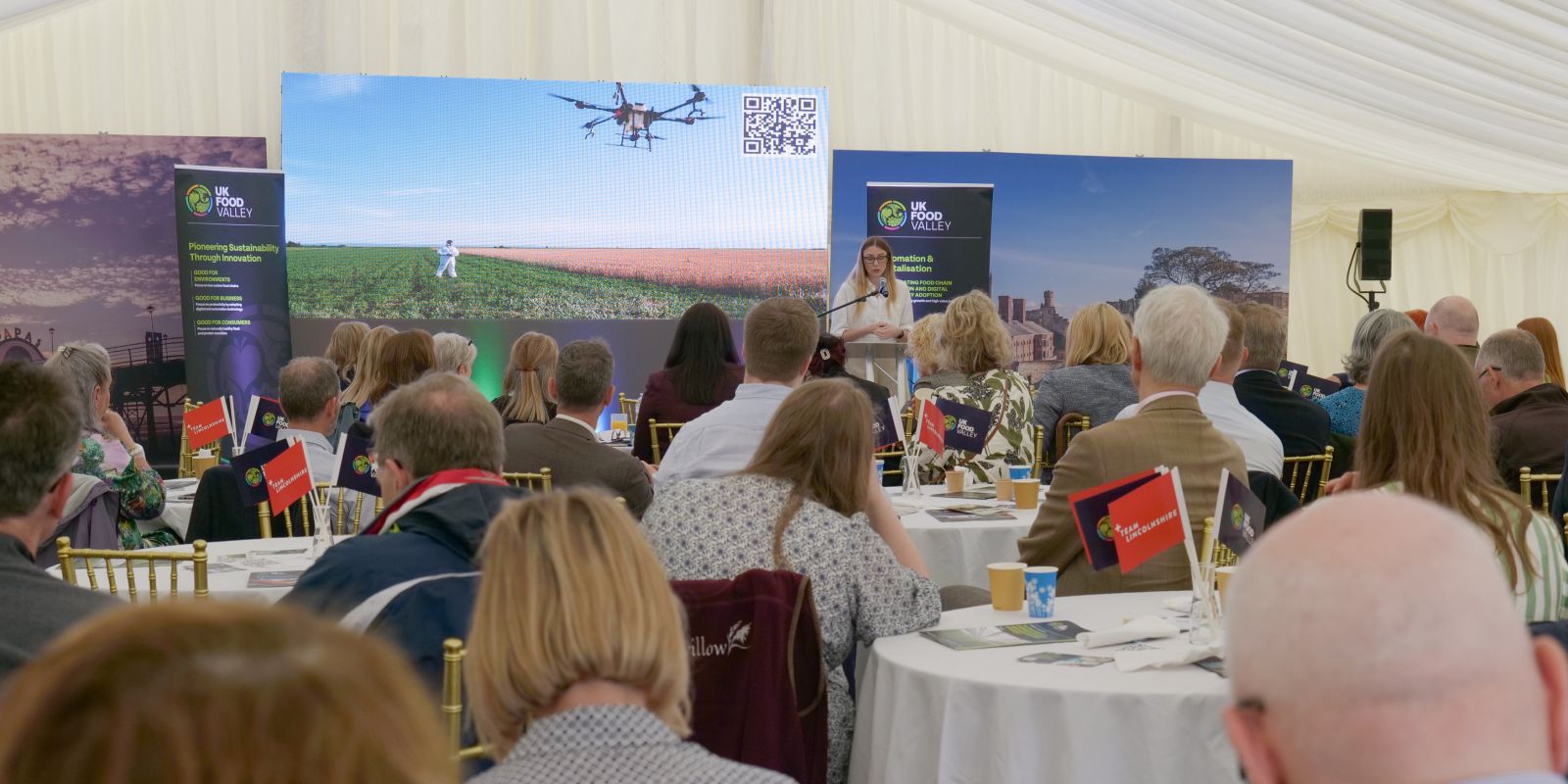
Greater Lincolnshire has long been one of the UK's most productive food-producing regions, but increasingly it is becoming known for something more than the volume of food it produces.
At this year's Lincolnshire Show, the UK Food Valley Brunch brought together industry leaders, innovators and policymakers to explore how the region is building on its agricultural heritage to create a globally significant food cluster. Bringing together representatives from the seafood, fresh produce and food processing sectors, the event offered an insight into the innovation, investment and collaboration helping to shape the future of food production.
While the speakers represented very different businesses and sectors, a number of themes emerged consistently throughout the morning. Food security, skills, technology, sustainability and long-term investment were recurring topics, underlining both the opportunities and challenges facing the industry. Above all, the event demonstrated how Greater Lincolnshire's greatest strength lies not in any single business or technology, but in the collective power of the cluster itself.
A Region at the Heart of UK Food Production
Opening the event, Councillor Sean Matthews, Leader of Lincolnshire County Council, set the tone by emphasising the strategic importance of food production in an increasingly uncertain world, "in the current global climate, protecting our food security is actually more important than ever before."
It was a simple statement, but one that framed much of the discussion that followed. Lincolnshire already produces around 30% of the UK's vegetables and salads, making it one of the most important food-producing regions in the country. Yet Matthews argued that safeguarding food production today requires a much broader perspective than simply growing more food. Water security, climate resilience, energy infrastructure, coastal defence and investment in innovation all play a critical role in protecting the sector's future.
The region is already seeing significant investment across high-tech food production, from advanced glasshouse growing and aquaculture to new protein technologies. Collectively, Matthews argued, these developments strengthen the region's ability to attract investment, influence policy and support growth, "with this collectively, we are more able to influence decision makers, shape policy and attract investment that can unlock huge opportunities within our area."
Those ambitions were echoed by Amy Conyard, Co-founder of Giraffe Distillers and host of the event, who provided an update on the progress made through UK Food Valley over the past year.
As a member of the newly formed UK Food Valley Panel, Conyard outlined the scale of the opportunity in front of the region. Greater Lincolnshire's agri-food sector generates £15 billion in annual sales, contributes £5 billion in economic value and supports more than 75,000 jobs. Around 30% of the nation's food moves through the region, while continued investment in logistics, cold storage, research and innovation is strengthening its position within the UK's food system, "The UK Food Valley has enjoyed a strong year of promotions, endorsements and positioning towards securing a Top 10 Global Food Cluster."
Recent developments have included major investment in cold storage infrastructure, the opening of the University of Lincoln's geothermal research glasshouse and a growing pipeline of agri-tech innovation projects designed to improve productivity and sustainability. Taken together, they demonstrate that UK Food Valley is moving beyond ambition and increasingly delivering tangible outcomes.
Turning Innovation into Opportunity
Innovation emerged as a defining theme throughout the morning, although it was clear that innovation means very different things across the food chain.
Representing the Seafood Cluster, Matthew Clarke, Founder of Aquacultured, shared plans for a £245 million land-based salmon farming facility in Grimsby. The project aims to transform seafood production through advanced water treatment technology and artificial intelligence, creating a highly controlled environment for salmon farming while reducing transportation requirements and improving sustainability, "we really are effectively building a water treatment plant that'll have fish swimming in it."
The scale of the ambition is significant, but so too is the technology behind it. Clarke explained how AI is already helping optimise feeding patterns and reduce waste, improving both efficiency and environmental performance. "With AI, we can feed at the right times, the right amount."
The choice of Grimsby was no accident. While the town's fishing heritage remains central to its identity, Clarke argued that its greatest strength lies in the ecosystem that already exists around it. With seafood processors, logistics expertise, skilled workers and supporting infrastructure concentrated in one location, Grimsby offers exactly the kind of cluster advantage that UK Food Valley seeks to promote, “there is such a spirit in the town. We are really pleased to be a Grimsby company."
The project is expected to create more than 100 permanent jobs and several hundred construction roles, while strengthening the UK's domestic seafood supply chain and reinforcing Greater Lincolnshire's reputation as a centre for food innovation.
Innovation can take many forms, however, as demonstrated by David Hoyles, CEO of English Olive Co and representative of the Fresh Produce Cluster.
A sixth-generation farmer from South Lincolnshire, Hoyles has spent recent years exploring opportunities through renewable energy, water management and diversification. His most high-profile venture is The English Olive Company, which has established the UK's first commercial olive grove and what is believed to be the world's most northerly commercial olive plantation.
At first glance, growing olives in Lincolnshire may seem unusual. Yet Hoyles' story was less about olives and more about adaptability, resilience and long-term thinking.
The project emerged from a combination of curiosity, research and a belief that changing climate conditions could create new opportunities for British agriculture. It also reflected a desire to build something for future generations while creating greater value through branded products and diversification. "Long-term thinking, generational approach, but we also need innovation."
Throughout his presentation, Hoyles returned repeatedly to the importance of water management, climate resilience and collaboration. His experience building reservoirs and investing in water infrastructure demonstrated how farmers are increasingly taking a proactive approach to future challenges.
Perhaps most importantly, he emphasised the value of working collectively, "join clusters. If we work collectively as a cooperation then we can be smarter." Whether discussing water storage, technology adoption or market development, his message reflected one of the core principles underpinning UK Food Valley: businesses are stronger when they work together.
Technology is equally central to the Food Processing Cluster, where Ian Dunk, Finance & Operations Director at Worldwide Fruit, brought a global perspective to the discussion through his role within one of the UK's leading fruit businesses.
Operating from Spalding, Worldwide Fruit sources produce from 31 countries and works with around 8,000 growers to supply retailers, wholesalers and foodservice providers across the UK. Processing around 100,000 tonnes of fruit annually, the business sits at the heart of Greater Lincolnshire's food processing ecosystem.
Dunk highlighted how technology is becoming increasingly important to maintaining quality, efficiency and competitiveness. One example is Softripe, the company's AI-powered avocado ripening system, which combines traditional ripening methods with advanced software to consistently deliver ready-to-eat fruit.
Worldwide Fruit has already invested £5 million in the technology and continues to explore opportunities in automation, robotics and sustainability. Together, the presentations from Clarke, Hoyles and Dunk demonstrated that innovation is not confined to one sector, one technology or one business size. It is happening across the entire food chain.
Skills, Technology and the Future Workforce
While investment and infrastructure featured heavily throughout the morning, one issue repeatedly surfaced as perhaps the greatest long-term challenge facing the sector: people.
Drawing on her own experience of building Pin Gin and Giraffe Distillers, Conyard spoke candidly about the realities of recruitment, skills shortages and changing career aspirations, "we've discovered that growing our own is going to be the only way to create a healthy talent pool."
Her reflections highlighted a challenge that many businesses across the food sector are grappling with. As technology becomes more sophisticated and businesses increasingly adopt automation, robotics and advanced manufacturing processes, the demand for technical and specialist skills continues to grow. At the same time, employers are competing for talent in a rapidly changing labour market.
Conyard also challenged assumptions about traditional career pathways, reflecting on her own route into business and emphasising the importance of creating opportunities for people with different educational backgrounds and learning styles.
Dunk returned to the issue later in the morning, arguing that attracting talent is one of the defining challenges facing modern food businesses, "the real issue, we think, is attracting them into the sector in the first place."
Rejecting the notion that younger generations are somehow less ambitious than previous ones, he argued that the food industry must do a better job of communicating the opportunities available. Modern food businesses require expertise across engineering, data science, logistics, sustainability, commercial management and technology, yet many young people remain unaware of the breadth of careers on offer.
Together, their comments reinforced a wider message from the event. The future of food production will depend not only on technological innovation, but also on the people capable of driving and managing it.
Water, Resilience and Long-Term Thinking
Alongside skills and technology, another issue quietly ran through almost every discussion: water.
Matthews spoke about coastal defence and the need to protect agricultural land from the long-term impacts of climate change. For a county where food production is so closely linked to the landscape itself, protecting those assets is fundamental to future growth.
Hoyles provided a practical perspective, discussing reservoirs, abstraction licences and water storage infrastructure that are helping his business become more resilient. His experience demonstrated how farmers are increasingly investing in long-term solutions to manage changing weather patterns and increasing pressure on natural resources.
UK Food Valley itself has increasingly prioritised water management as a key strategic issue, recognising that food security and water security are intrinsically linked. The discussion served as a reminder that future resilience will depend not only on innovation and investment, but also on the careful stewardship of natural resources.
The Power of the Cluster
As the event drew to a close, it became clear that despite their different sectors and perspectives, the speakers shared a remarkably consistent view of the future. Technology matters. Skills matter. Sustainability matters. But perhaps most importantly, collaboration matters.
Throughout the morning, speakers repeatedly returned to the importance of partnership, knowledge-sharing and collective action. Whether discussing seafood production in Grimsby, olive growing in South Lincolnshire or fruit processing in Spalding, each speaker highlighted the benefits of operating within a connected ecosystem of businesses, researchers, educators and policymakers.
As Dunk observed, "we don't succeed in isolation." That sentiment sits at the heart of UK Food Valley's ambition.
The vision is not simply to support individual businesses or attract individual investments, but to create an ecosystem where food producers, processors, researchers, educators and policymakers work together to drive growth and innovation. The examples shared throughout the morning demonstrated that this vision is already taking shape.
From AI-powered salmon farming and advanced fruit ripening systems to geothermal research facilities and pioneering olive production, Greater Lincolnshire is proving that innovation can thrive across every part of the food chain. More importantly, it is demonstrating how collaboration can turn individual successes into collective strength.
If UK Food Valley's ambition is to become a globally recognised food cluster, the conversations at this year's Lincolnshire Show suggested that the foundations are already firmly in place.