THE NEW FRONTIER OF DUAL-USE INNOVATION: WHY LINCOLNSHIRE CAN LEAD THE FUTURE OF FOOD SECURITY AND NATIONAL SECURITY
From the birthplace of the tank to the future of Autonomous Intelligence
“Lincolnshire feeds a nation, defends a nation, and powers a nation. Now it has the opportunity to innovate for a nation”.
Innovation excellence rarely emerges by accident. It grows where geography, expertise, industry and ambition converge. Lincolnshire stands at precisely such a moment.
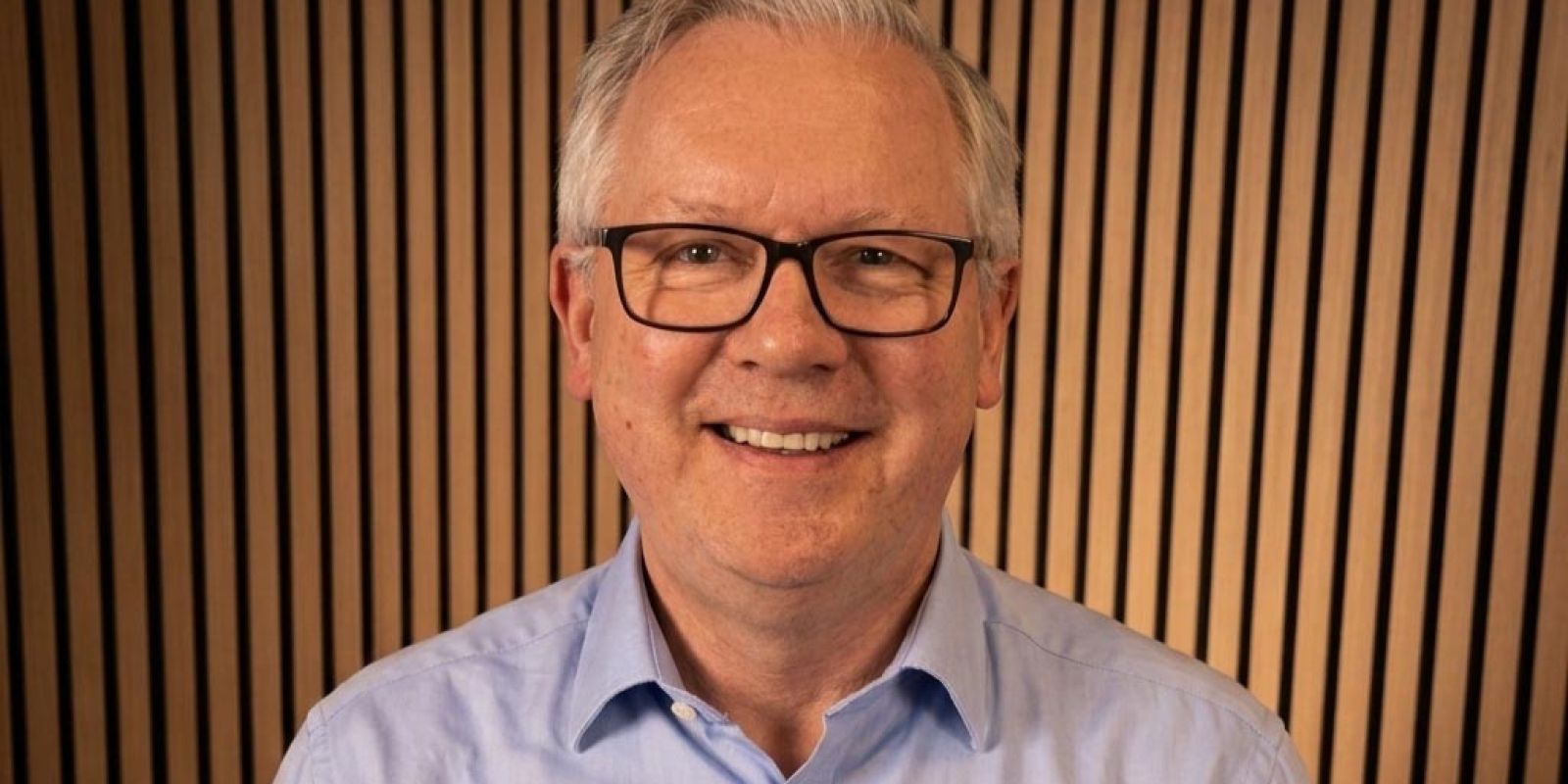
The UK Food Valley sat down with Russell Schofield-Bezer; Executive Chairman of Audiebant; founder and CEO of RSB Advisory Ltd; Deputy Chair of the Board of Governors at the University of Lincoln; Chair of the Greater Lincolnshire Innovation Panel; and a Board Member of UK Research and Innovation (UKRI). With an international career spanning JP Morgan and HSBC, where he held senior investment and capital markets leadership roles, Russell brings extensive expertise in innovation, investment, commercialisation, and regional economic growth.
For over a century, Lincolnshire has been at the forefront of solving some of society's most fundamental challenges. Instrumental in the development of mechanised agriculture, which transformed food production, Lincolnshire also developed the engineering capability that contributed to one of Britain's most significant military innovations: the tank.
Today, these historic strengths are converging once again around an opportunity that is both nationally significant and internationally relevant: dual-use innovation.
At first glance, agriculture and defence may appear to be separate worlds. One is concerned with feeding populations; the other with protecting them. Yet beneath the surface lies a remarkable overlap of technologies, challenges and opportunities.
Artificial intelligence, robotics, autonomous systems, remote sensing, data analytics, risk modelling and resilient supply chains are becoming critical capabilities in both sectors.
This convergence creates a compelling proposition.
In April 2026 Greater Lincolnshire was selected by UK Research and Innovation for up to £15 million from the £500 million Local Innovation Partnerships Fund, one of the delivery instruments of the Modern Industrial Strategy, as one of seven new areas chosen through open competition. The programme, branded Lincolnshire EDGE (Engine for Dual-use Growth & Excellence), is now in co-design with UKRI, with the full portfolio of projects due in September.
"We're connecting food security with national security,” said Russell, “Who would not want to be doing that?"
At a time when governments around the world are focused on resilience, productivity and strategic capability, Lincolnshire finds itself uniquely positioned to become the UK's leading centre for dual-use technology development.
The case for this is clear. Research and development spending in Greater Lincolnshire is £353 per employee against a UK average of over £1600, and innovation jobs account for 1.8% of employment set against 4.4% nationally.
Last year, Lincolnshire was recognised evidentially in the Commons Science, Innovation and Technology Committee by the Executive Chair of BBSRC and by DEFRA's Chief Scientific Adviser, as one of a small number of nationally significant clusters in robotics, AI and crop systems.
The ambition is to take credible steps to close the gap.
INNOVATION HAPPENS IN PLACES
There is a tendency to think of innovation as something abstract. In reality, the world's most successful innovation economies are deeply rooted in place.
The objective is simple: align investment, skills, expertise and policy around areas of genuine competitive advantage.
As Russell explains, that philosophy is especially relevant to Lincolnshire, "Successful innovation is more than just an excellent idea. It requires a village of entrepreneurs, customers, researchers and investors willing to support it."
Rather than attempting to imitate the metropolitan economies of London, Manchester or Birmingham, the region is beginning from a position of authentic strength.
Lincolnshire already produces a third of the nation’s vegetables through its globally significant agri-food sector. It hosts substantial defence assets and expertise and is developing strengths in clean energy. Most importantly, it is home to institutions capable of connecting these opportunities into a coherent innovation ecosystem.
The opportunity is not to become another innovation region. It is to become the leading innovation region for food security, national security and resilience.
WHY AGRICULTURE AND DEFENCE BELONG TOGETHER
Two sectors. One technology future.
Agricultural technologies are creating solutions the defence sector needs, while defence innovations are finding commercial applications in farming and food systems.
In both sectors, success depends upon gathering information, interpreting it correctly and acting quickly.
A farmer deciding when to treat a crop relies increasingly on AI, predictive modelling and autonomous technologies, and a defence general making operational decisions relies on similar capabilities.
This is the insight that sits at the heart of the emerging EDGE dual-use proposition for Lincolnshire.
Rather than artificially forcing sectors together, the aim is to create an environment where shared technologies can be developed, tested and commercialised across multiple markets. For investors, this matters.
Technologies that can access both agricultural and defence markets possess significantly greater commercial potential than innovations serving only one sector. Put simply, dual-use innovation creates stronger businesses.
WHY INVESTORS SHOULD BE PAYING ATTENTION
Perhaps the strongest argument for Lincolnshire's dual-use opportunity is not technological. It is economic.
Global investment is increasingly seeking opportunities linked to resilience. Food security, supply chain resilience, defence capability, energy security and AI have moved from specialist concerns to mainstream priorities.
The challenge for investors is identifying places where these themes converge.
Lincolnshire offers a rare combination of established market demand, research capability, sector expertise, physical test environments, emerging innovation infrastructure, and coordinated public sector support.
The region is already home to significant agri-tech innovation through the Lincoln Institute for Agri-food Technology (LIAT), the UK Food Valley, and associated commercialisation programmes.
Growing 30% of the nation's vegetables, and producing 18% of the UK's poultry, Greater Lincolnshire supports around 75,000 jobs and is establishing the UK Food Valley as a Top 10 Global Cluster. It offers three distinct clusters across seafood, fresh produce, and food manufacturing, supported by unmatched academic and logistics capabilities. South Lincolnshire serves as the primary national center for fresh produce handling, processing, and cold chain distribution with 30% of the UK’s food moving through this hub.
At the same time, defence innovation is accelerating. RAF Waddington is the headquarters of UK ISTAR operations (Intelligence, Surveillance, Target Acquisition, and Reconnaissance), RAF Coningsby operates as one of two vital Quick Reaction Alert (QRA) stations protecting UK airspace, housing frontline Eurofighter Typhoon combat squadrons alongside the Battle of Britain Memorial Flight, and RAF Cranwell functions as the historic first air academy globally, dedicated to officer training, aircrew instruction through the Central Flying School, and leadership development.
Meanwhile industry collaborative initiatives such as DecisionWorks – a joint venture between the University of Lincoln, QinetiQ, Quantexa and SRC UK, and MOD recognised organisations such as the Greater Lincolnshire Regional Defence and Security Cluster (GLRDSC), involving a unique blend of academic, public, and industry leaders, are gaining traction and national interest.
For investors, this reduces one of the greatest risks in innovation: isolation. Rather than backing a single company, they gain access to a growing cluster.
Clusters matter because they attract talent, generate businesses, accelerate knowledge exchange and create the critical mass needed to attract larger institutional capital.
As someone who has invested throughout his career, both corporately and privately, Russell highlights a crucial point; "Access to finance, access to talent, access to facilities, access to customers and access to procurement are all essential."
The most successful innovation ecosystems provide all five.
THE UNIVERSITY OF LINCOLN'S MOMENT
From educating students to solving society's greatest challenges.
Universities have traditionally been viewed as institutions for education and research. Increasingly, their role is evolving. The most influential universities are becoming convenors, connectors, and engines of economic growth, and the University of Lincoln is already demonstrating this transition.
But success will be measured outside its own walls, not in siloed education data and impact. Businesses will grow here, technologies will be developed, refined and adopted, investment will flow, and graduates will be able to build careers in Lincolnshire.
Already a leader on the national agri-tech innovation map through CERES/LINCAM and aligned partnerships with Cambridge, East Anglia and industry leaders, the University has established itself as a credible force in commercialisation and applied research.
Now it has the opportunity to do the same in dual-use technology.
The aspiration is ambitious but realistic says Russell. "I'd like to see Lincolnshire viewed as a national centre and an international leader in those two sectors."
For the university, this means becoming more than a place where research happens. It means becoming a place where complex problems are solved; where government tackles food resilience, industry develops autonomous systems, investors find the next generation of dual-use ventures, researchers collaborate across disciplines to address real-world challenges, and students become the talent pipeline that sustains future growth.
A DECADE ON
What could this look like in 2035?
Picture a thriving cluster of dual-use technology companies operating across the county, with international investors regularly visiting Lincoln to explore innovation opportunities.
Start-ups that began in university laboratories have become scale-ups serving customers across agriculture, defence and critical infrastructure.
Autonomous systems developed in Lincolnshire are improving agricultural productivity globally, and AI decision-support platforms created in the region are supporting both food production and national resilience.
Researchers from around the world collaborate through Lincolnshire centres of excellence.
And when government looks to address food security, national security and resilience, there is one place it instinctively turns to: Lincolnshire.
CONCLUSION: THE EDGE OF OPPORTUNITY
The question is no longer whether Lincolnshire can become a leading centre for dual-use innovation.
The question is whether the rest of the country realises the opportunity quickly enough to join it.
"Innovation always happens in a place. The opportunity now is to ensure that place is Lincolnshire."
Russell Schofield-Bezer was interviewed by Kate Storey at the UK Food Valley, managed and funded by Lincolnshire County Council.