WHY DUAL-USE TECHNOLOGY IS THE FUTURE OF INNOVATION IN AGRICULTURE
“The next breakthrough in agriculture may already exist in defence.”
That’s the promise of dual-use technology - innovations developed for one sector but capable of transforming another. As industries face mounting pressure to do more with less, the most exciting advances are no longer emerging from isolated silos. They are emerging at the intersection of disciplines, where defence, agriculture, artificial intelligence, robotics and sensing technologies collide.
In Lincolnshire, that collision is already happening.
For B-hive Innovations, a Lincoln-based agri-tech company celebrating almost a decade of growth, innovation starts not with technology, but with problems. Whether helping growers predict cauliflower yields, combat disease in onion crops or improve potato harvest forecasting, the company takes a technology-agnostic approach, identifying the challenge first and then bringing together the right suite of solutions to solve it.
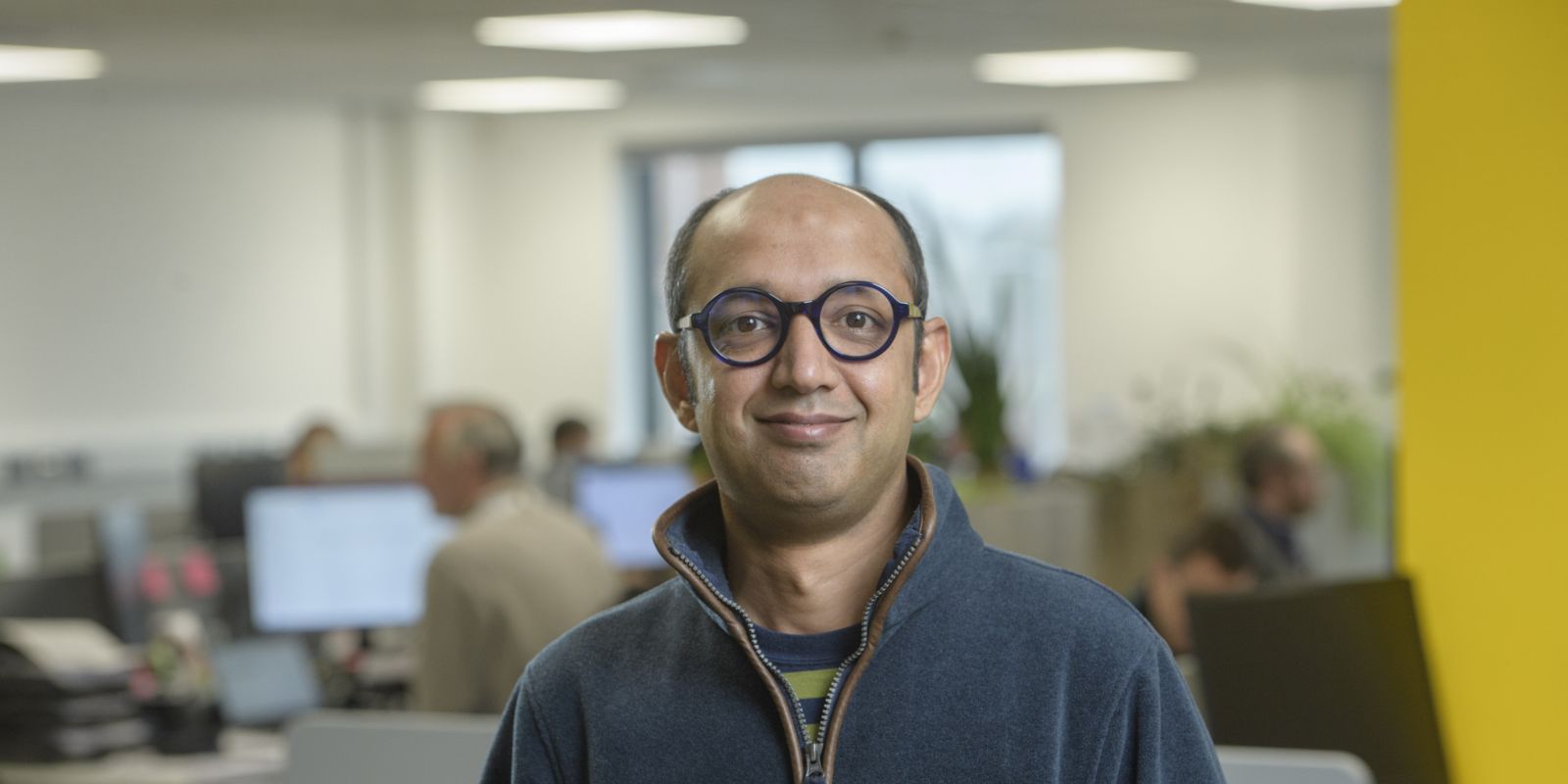
“If you want to innovate in your own sector, you’ve got to go beyond that sector to look for cross-pollination of technologies,” says CEO Vee Gururajan. “You really need to see what is out there in different industries and ask how you can adapt that into your own.”
That mindset sits at the heart of dual-use innovation.
One of the strongest examples is B-hive’s TuberScan project, which adapts ground-penetrating radar technology originally developed for military applications. Used in defence to detect buried threats such as improvised explosive devices, the same technology is now being repurposed to scan beneath agricultural soils and identify root crops to maximise harvest.
From detecting bombs to detecting potatoes. It is a simple idea with profound implications.
If growers can see what lies underground before lifting a crop, they can make more informed harvesting decisions, predict marketable yields, reduce waste and optimise logistics across the supply chain. Working alongside defence partners, B-hive secured access to military-grade equipment before adapting it into a commercially viable agricultural solution through further innovation funding.
The principle demonstrates how technologies designed to protect nations can also help secure food production, improve sustainability and boost economic resilience.
But radar is only one example. The same opportunities exist across autonomous vehicles, advanced imaging systems, machine learning, AI-powered decision support tools and remote sensing technologies. Drones used for reconnaissance can assess crop health. Computer vision systems developed for security applications can count, measure and grade agricultural produce. Predictive analytics used in defence planning can forecast yields and identify disease risks before they become costly problems.
And that future belongs to technologies that refuse to stay in one lane. Few places are better positioned to drive this agenda than the UK Food Valley.
The region combines two strategic strengths rarely found together - one of the UK’s most productive agricultural landscapes and a long-established defence presence anchored by RAF bases and aerospace expertise. Rather than viewing these sectors separately, innovators increasingly see them as complementary.
“We are surrounded by rural agricultural land and we are also surrounded by a lot of RAF bases and clever technology that is keeping our country safe,” says Gururajan. “There is a natural collision point and a cross-pollination of things that are happening in defence that you can translate and transfer.”
This convergence creates fertile ground for a new generation of businesses capable of serving both commercial and strategic markets. It is also generating demand for new skills, combining engineering, software development, AI, robotics, data science and sector-specific expertise.
Innovation ecosystems thrive when people, ideas and technologies are close enough to interact. Lincolnshire’s growing network of universities, technology firms, agri-tech businesses and defence companies is creating precisely that environment. The result is a region where collaboration happens naturally and where breakthrough ideas can move more quickly from research into real-world application.
For B-hive, the ambition is clear - continue bringing emerging technologies together to reduce waste, improve productivity and help industries tackle increasingly complex challenges. AI, machine learning, precision breeding, sensing technologies and engineering biology all form part of a future in which innovation is amplified through collaboration rather than constrained by sector boundaries.
The wider opportunity is even bigger. As governments and investors place growing emphasis on security, resilience, sustainability and economic growth, dual-use technologies offer a rare proposition: solutions capable of delivering benefits across multiple industries at once.
One innovation. Multiple markets. Shared impact.
Or, as Gururajan sees it; “I see the opportunity of bringing agriculture and defence together and creating an agri-defence corridor for technology companies to come together, collaborate and create solutions that can benefit both industries.”
The next wave of innovation may not come from inventing something entirely new. It may come from looking at existing technologies through a different lens.
And in the space between defence and agriculture, that future is already beginning to take shape.
Vidyanath Gururajan was interviewed by Kate Storey at the UK Food Valley, managed and funded by Lincolnshire County Council.