WHY INNOVATION IN SEED PRODUCTION IS TRANSFORMING THE FUTURE OF FOOD
In the world of food production, the most important ingredient is often the one we never see. Long before soil health, climate resilience or supply chains come into play, it all begins with a seed.
The UK Food Valley met with David Coop, Managing Director at Elsoms Seeds, to find out why producing a high-quality seed is critical to the whole food chain.
As Coop explains, “The seed is the foundation of pretty much the entire food production system. It’s that genetic potential contained within the seed that really determines what a grower can achieve in terms of yield, quality, resilience and sustainability.”
This idea underpins a fundamental truth: you can optimise farming systems in many ways, but you cannot essentially outperform the genetics you start with. In that sense, the seed is both the starting point and the ceiling of agricultural performance.
This is why high-quality seed matters so profoundly across the entire food chain. The characteristics embedded within a seed - its genetic blueprint - determine how a crop responds to weather stress, disease pressure, soils and input regimes. Growers can refine cultivation methods, but they cannot fundamentally change those genetics once in the ground. That is why plant breeding is such a long-term, strategic endeavour.
As Coop notes; “The choices that we make as breeders today really do influence what growers are able to produce a decade from now.” Developing a new crop variety can take 10 to 15 years, requiring sustained investment, scientific expertise and a clear vision of future farming conditions. Today’s research decisions really are shaping tomorrow’s food system”.
Modern seed production is therefore no longer a traditional agricultural activity. It is an advanced scientific discipline at the cutting edge of innovation. Breeders now combine genomics, data science, automation and environmental control to accelerate progress.
Research programmes draw on technologies such as tissue culture speed breeding to shorten generation cycles, while genomics platforms allow scientists to map DNA and identify traits with unprecedented precision. And controlled growth rooms create tightly managed environments where plants can be studied without the variability of field conditions.
Yet crucially, the process does not end in the laboratory. Field trials remain essential, ensuring that promising varieties perform reliably in real-world conditions. As Coop describes it, “Plant breeding today is about bringing all sorts of tissue culture techniques and speed breeding together to get improved varieties to growers as quickly as possible”.
Among the most transformative developments within this scientific landscape is gene editing. Coop explains that while often confused with genetic modification, gene editing is fundamentally different in both method and outcome. Rather than introducing foreign DNA from another species, gene editing works with the plant’s existing genetic material, making precise adjustments to enhance or suppress specific traits. “What gene editing does allows us to do that very precisely. Rather than having a huge range of genes and hoping we get the right combination, we can be exact about the change.” In essence, it turns plant breeding from a probabilistic process into a targeted one.
The scientific principle behind gene editing is both sophisticated and intuitive. Coop explains; DNA can be thought of as a code, and once Elsoms scientists understand which sections of that code control particular traits - such as disease resistance or oil content - they can make highly specific changes. Coop describes it as “a bit like a zipper,” where sections of the genetic code can be removed, altered or duplicated to achieve a desired outcome.
Importantly, these changes mirror what could occur naturally over time through mutation and selection; the difference is that gene editing allows breeders to achieve them deliberately and far more quickly. This has profound implications for the speed of innovation. A great example can be found in crops such as parsnips, where traditional breeding might require seven generations and therefore up to 14 years just to stabilise parent lines, but gene editing offers the potential to dramatically compress timelines. It enables scientists to work directly with high-performing existing varieties, making targeted improvements rather than starting from scratch.
These advances are being matched by significant investment in infrastructure and capability. Elsoms Seeds is a long-established, privately owned British company with more than 180 years of heritage, reflecting the deep-rooted nature of plant breeding in Lincolnshire as both a science and a long-term investment in the future of food production. Today, the business employs around 130 people and is structured around a balanced mix of specialist roles that mirror the complexity of modern seed innovation.
Approximately a third of the workforce is dedicated to research and development, including scientists with PhDs in areas such as genomics, biological data analysis and tissue culture, working alongside field trial specialists who translate laboratory breakthroughs into real-world performance.
The remainder of the organisation spans highly skilled operational teams, engineering and machinery specialists, as well as commercial, sales and management roles, highlighting how today’s seed industry sits at the intersection of science, technology and practical agriculture.
This is why the business has committed £1.7 million to a state-of-the-art seed processing facility designed to improve grading accuracy and enable customer-specific treatments. This matters because modern farming systems increasingly rely on precision input. Seeds must meet exacting standards for size, purity and performance to function effectively with technologies such as precision drilling. As Coop highlights, even small inconsistencies can have costly consequences for growers, making quality control essential.
Alongside this, the company is developing a new innovation centre in Spalding, which will bring together laboratories, growth rooms and collaborative spaces for partners across the industry. The aim is not only to accelerate research but also to create a hub where growers, scientists and stakeholders can engage directly with the breeding process and contribute insights at every stage.
This kind of investment is particularly significant within the context of the UK Food Valley, where a powerful cluster of agricultural and food production expertise is accelerating. The region brings together growers, processors, researchers and agri-tech businesses in close proximity, creating a dynamic ecosystem for innovation. By locating high-level plant science capability within this environment, companies like Elsoms are strengthening the entire network.
The innovation centre is designed not just as a research facility, but as a place where knowledge can be shared and partnerships developed. As Coop puts it, “the goal is to connect the science we do with our potential to educate and demonstrate why that is really important for our industry. This integration of science, industry and practice is what allows innovation to move rapidly from concept to commercial impact”.
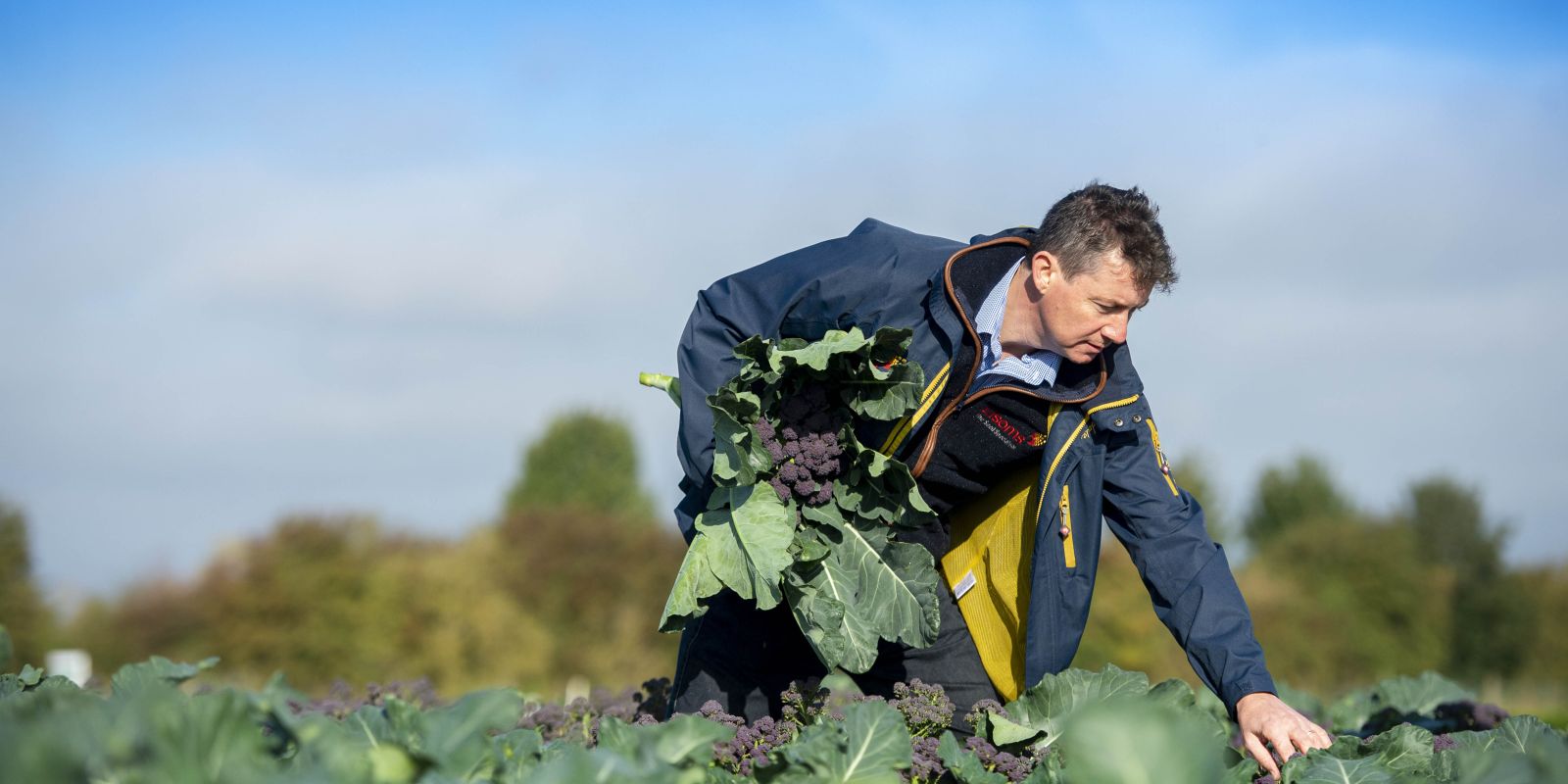
The benefits of this approach can already be seen in the marketplace. Plant breeding has transformed products such as purple sprouting broccoli, which was once highly seasonal with a short availability window. Through sustained innovation, breeders have developed varieties that can be grown across different climates and produced year-round, expanding the category and creating value throughout the supply chain. Growers gain a more reliable and profitable crop, retailers can offer a consistent product, and consumers benefit from improved quality and availability. It is a clear demonstration that better seeds do not just improve individual crops - they reshape entire markets.
However, despite the scale of opportunity, the industry faces complex structural challenges, notably in policy and investment. Plant breeding requires long-term commitment, yet the government policy environment often operates on short-term cycles. Coop highlights the need for a coherent national food strategy, noting that “food is part of our national infrastructure and part of our national security,” yet sustained support for innovation is often lacking.
And so whilst private companies continue to invest significantly in R&D and facilities, there is a widespread view that greater government backing, particularly in funding, skills development and long-term policy stability, could greatly accelerate that progress. The mismatch between decade-long breeding programmes and short-term policy frameworks remains a critical barrier.
Ultimately, the transformation of seed production represents one of the most important and least visible revolutions in the food system. From advanced genomics to precision machinery, from gene editing to collaborative innovation hubs, the sector is redefining what is possible in agriculture.
Yet the underlying principle remains disarmingly simple. As Coop summarises, “when it comes to food security, everything starts with seed.” In the UK Food Valley and beyond, that understanding is shaping a future in which better seeds lead not just to better crops, but to a more resilient, sustainable and innovative whole food ecosystem.
David was interviewed by Kate Storey at the UK Food Valley, managed and funded by Lincolnshire County Council.