MORE PEOPLE, EATING MORE SEAFOOD, MORE OFTEN

A remarkable estimated 70% of England's seafood is processed in the UK's largest fish processing cluster in Grimsby providing a unique foundation towards a global force for good in this healthy, sustainable, innovative, food sector.
This month we catch up with Simon Dwyer who heads up Seafox Management Consultants Ltd which manages fish and seafood related organisations in the Grimsby seafood processing cluster supporting businesses with growth planning and leadership. Simon was also made CEO and Director of the influential UK Seafood Federation (UKSF) when it was launched in January 2025, representing the UK's seafood processing and trading sector on a global platform in a mission to ensure seafood consumption grows to support the British diet and health.
Simon and his colleagues have also built exceptional contacts across the international seafood industry, working tirelessly with businesses, ambassadors, and governments in other countries to promote the industry. Working with the seafood industry and University of Lincoln, Simon has also spearheaded a rapid growth in skills and innovation provision for the industry.
He joins the UK Food Valley to explain how the businesses in this unique cluster represent the whole value-chain of processors and trading activity, and why this is a unique competitive advantage and an important opportunity.
“Over the last decade, my work with Seafox and the newly established UK Seafood Federation (UKSF) has given me a front-row seat to major transformations within this cluster. We’ve seen rapid changes in technology, consumer expectations, supply chain demands, and global trade dynamics. Yet throughout all of this, one thing has remained consistent: the resilience and commitment of the people here. Their skill, their pride, and their willingness to embrace change have created the platform for an ambitious and forward-looking future.
At its core sits our mission to get more people to eat more fish more often. With a clear objective, the UKSF is the voice of the UK seafood industry promoting healthy, nutritious protein in our diet through 5 clear priorities; Trade Flows, Industry Integrity & Reputation; Ethics & Sustainability; Skills & Talent; and Communications & Engagement.
And most of what we process and trade happens in Grimsby. With 5,500 jobs and 10,000 in the supply chain, our overall mission really is to keep the sector highly competitive”.
Integrated Cluster Strengths
“One of Grimsby’s greatest assets is the depth and diversity of its seafood value chain. Processors, traders, cold storage specialists, logistics companies, engineering firms and innovators all operate in close proximity. This level of integration makes the cluster highly adaptable and efficient and means ideas spread quickly, partnerships form easily and problems are solved collectively.
Working with international partners across Europe, Asia, and the Middle East has shown me just how unique this is. Few places in the world can claim such a concentration of seafood expertise in one geographic area and this is why global businesses continue to choose Grimsby as their UK base and why the cluster is increasingly recognised as a model for excellence”.
An Innovation Wave
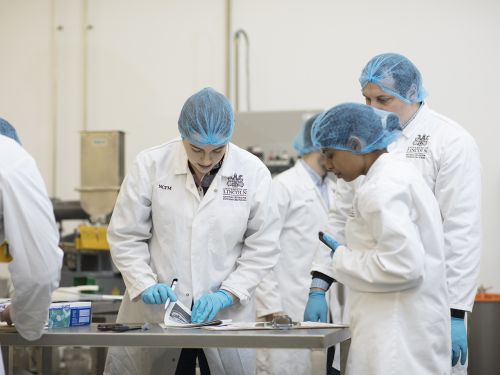
“One of the most exciting developments in recent years has been the establishment of the University of Lincoln’s (UoL) specialist seafood hub and apprenticeship programmes at the Humber Seafood Institute. These initiatives are rapidly accelerating innovation and providing the next generation of skilled workers for the sector.
Young people entering this industry today are being trained in cutting-edge fields - from advanced processing technologies to food science, digital operations, and aquaculture systems. The need for these skills has never been greater, especially as seafood businesses adopt more automation, AI-assisted monitoring, and data-driven supply chain tools.
We are rightly proud of our careers awareness journey which starts in schools and colleges. The UKSF has a fantastic schools ambassador who raises the awareness of careers with teaching staff, careers advisory staff, parents, and of course the pupils themselves. We set the pathway for students to understand the great career prospects there are in the industry and as part of that journey we engage with the university to set up apprenticeship programmes. We recently opened a Technical Apprenticeship program in partnership with several local businesses and there are more apprenticeship opportunities in the pipeline. Over 120 employees locally have also been through our bespoke Future Seafood Leaders programme delivered by a university and industry in a unique collaboration”.
Sustainability as a Driving Force
“Sustainability is no longer an optional extra. It is the driving force shaping the seafood sector’s future and in Grimsby. We are seeing significant advances in circular economy practices, and remarkably, there is no such thing as waste in our seafood supply chain. Called co-products, the vast majority of these – skins, frames, heads, shells - are collected and processed into fish oil or fish meal.
And with the University of Lincoln we’re looking at increasing that value-chain to turn these products into other uses such as beauty products, medicines, and yet to be discovered uses over the coming years. In short, businesses are reducing waste, eliminating unnecessary plastics, embracing renewable energy, and rethinking transport and packaging.
The UKSF has also been working with the Seafish Industry Authority on a carbon calculator tool. The supply chain can be long in some circumstances, retrieving seafood from the northern or the southern hemispheres into Grimsby for the processing. And so there has been a strong collaboration with Seafish who have sponsored this carbon tool (now is available on their website) where businesses can calculate the footprint of bringing - for example - chilled whitefish from Iceland or maybe just simply moving mackerel from Scotland. This is a really useful and innovative tool which can now flag any higher carbon elements which can then be addressed”.
Strengthening National Food Security
“Our fantastic partnership with the university team enables our supply chain to work with academics and researchers on manufacturing improvements, cool-chain efficiency, factory processes and supply-chain improvements.
Sustainability is constantly under scrutiny with all the businesses ensuring wild-caught and farmed fish is sourced in a sustainable way and our major processors have teams of people working on these issues alongside organisations such as the Marine Stewardship Council and Aquaculture Stewardship Council and similar organisations. Together with innovations and developments in local aquaculture production, this forms the start of the food security agenda in keeping seafood of all types on our plates 365 days per year.
The combination of local processing capacity, skilled labour, established supply chains and strong public-sector support gives the cluster an unrivalled platform to grow domestic seafood production. But investments in skills, infrastructure and innovation will be key to ensuring the UK maintains a resilient and sustainable food system in the years ahead”.
A Vision for the Next Decade
“After nearly forty years working across maritime, logistics, and the seafood sector, I’ve come to truly appreciate what makes Grimsby such an extraordinary place. It isn’t just a town with a legacy in seafood - it is the beating heart of the UK’s fish processing industry, responsible for an astonishing 70% of England’s seafood processing. This remarkable scale has shaped Grimsby into a global force for good in producing healthy, sustainable, and innovative food.
We are on the cusp of a new era. One in which the cluster not only maintains its historic strengths, but also pioneers the practices, technology and sustainability standards that will define the next generation of seafood production. From cutting-edge RAS facilities to AI-driven processing operations, the future is full of opportunity.
But this story is not just about an industry, it’s about a community. It’s about people who care deeply about quality, sustainability and pride in their work. And it’s about ensuring that Grimsby continues to thrive as a place of innovation, resilience and global significance.
As I look ahead, my ambition is to help establish Grimsby as an international centre of excellence for seafood and aquaculture innovation. With the right partnerships across industry, academia, government and global markets, I believe this vision is entirely achievable.
And with more people eating more fish more often we’ll continue to gain growing global leadership, increase our economic output, and anchor national seafood security, creating incredibly exciting career opportunities for our young people and communities for years to come”.