WITHOUT A HAPPY, HEALTHY ANIMAL - YOU SIMPLY DON’T HAVE A BUSINESS
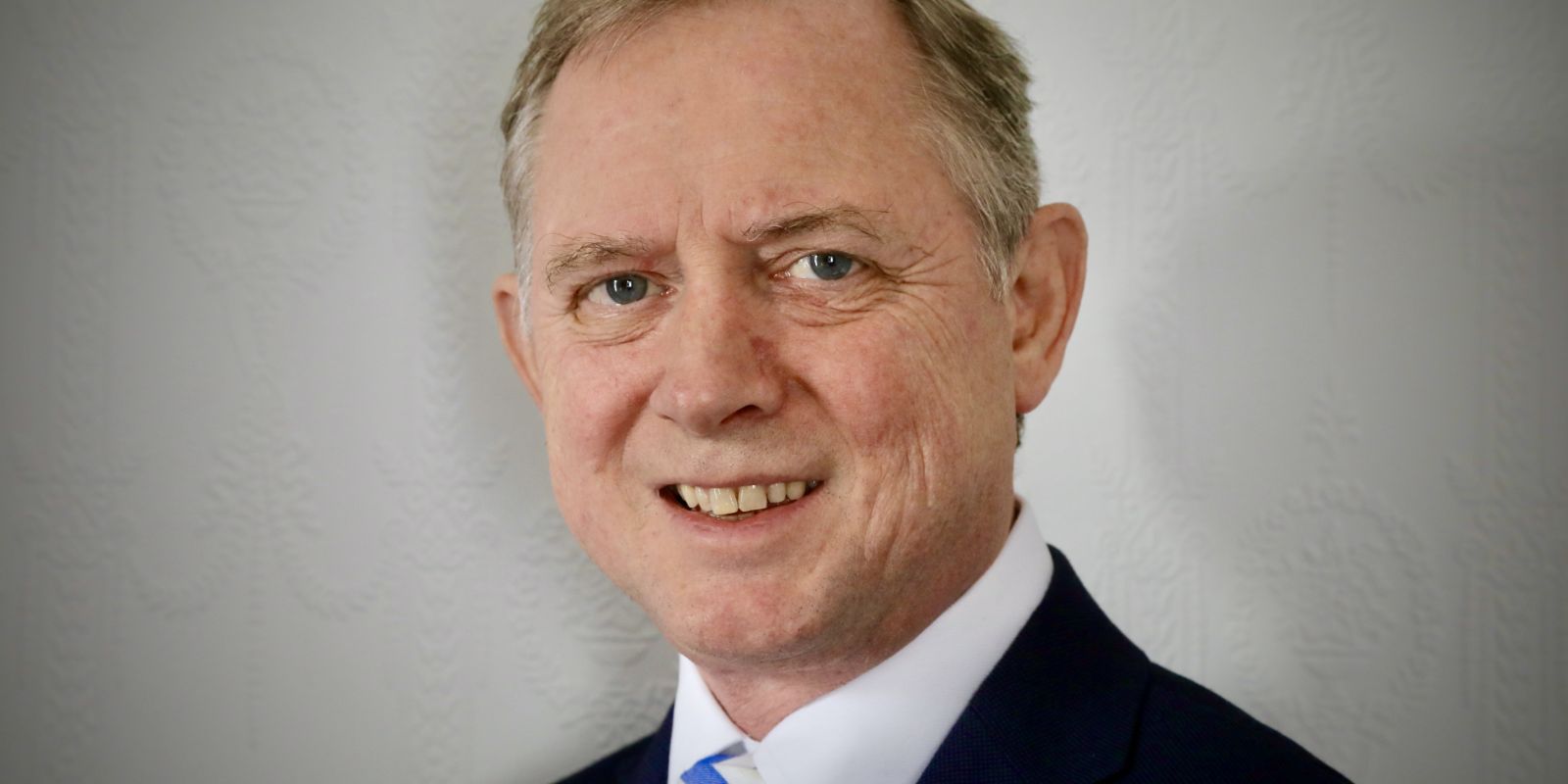
Mike Berthet joined the UKFV to discuss a £200m investment facility in the UK’s first and largest onshore salmon fish farm in Grimsby, creating over 300 local jobs, and increasing the availability of healthy, nutritious, and responsibly raised seafood in line with animal and health and welfare standards.
Mike has over 40 years of experience in Fish & Seafood, spanning a successful career culminating as Director of Fish & Seafood with leading UK foodservice company and M&J Seafood. He has long championed responsible and sustainable sourcing of seafood for foodservice both here in the UK and internationally and has supported the organising committee for the North Atlantic Seafood Forum. Well known in the world seafood arena, Mike is dedicated to ensuring responsible aquaculture is available for current and future generations in line with the UN Commitment to increase the availability of healthy, nutritious responsibly farmed Seafood and is also an advocate of the UN’s Sustainable Development Goals.
UKFV: Welcome Mike. We are here to talk about your 28-acre state-of-the-art onshore Atlantic salmon fish farm development in Northeast Lincolnshire. Can you start by telling us why you are investing in RAS (Recirculating Aquaculture Systems) production on land?
MB: Global demand for nutritious protein is rising, and aquaculture is now the growth engine of seafood supply. RAS lets us control water quality, temperature, filtration, and feeding with precision which means consistently healthy fish, minimal disease risk, and reliable performance. Technological advances over the last five years have dramatically improved RAS economics - bringing production costs down whilst raising quality, so land‑based systems now stack up both commercially and sustainably.
Alongside this, the United Nations has mandated that aquaculture is the most economic use of land and water to feed a growing global population. In 2022, the world passed the tipping point where we began to eat more aquaculture seafood than wild capture, and aquaculture is the most sustainable way of providing that protein.
The numbers speak for themselves. You need to provide about 8 kilos of feed for every kilo of beef produced or 2-3 kilos for a chicken, plus the huge amounts of water and land required compared with a salmon.
For the salmon, the ratio is closer to 1.1-1.2 kilo in for 1 kilo back, which is huge. And of course, it's cold-blooded so it doesn't need food for energy to keep it warm. It’s also heavily rich in nutrients and omega-3.
UKFV: The largest seafood cluster sits within the Greater Grimsby cluster. Is this the primary rationale for selecting this site in Greater Lincolnshire to invest from across the whole of the UK, and were there other deal-landing benefits associated with this location?
MB: Yes. Grimsby processes around 70% of the UK’s seafood and has a phenomenal work ethic and skills base. Locating the farm next to major processors slashes logistics - our fresh salmon will travel within just 3 km to reach customers, rather than hundreds of miles by road. That reduces cost, carbon, and packaging waste. And of course, the Grimsby work ethic is superb. And they are eager to learn new skills.
We looked at about 200 sites across the UK. We also looked at several providers of the tech. And we looked at what would constitute a favorable location for production running 7,500 tonnes of salmon and Grimsby just shone like a beacon.
We can’t speak highly enough of the commitment and support that we’ve had from Greater Lincolnshire’s UK Food Valley and NEL Council. Having the Council 100% behind us was awesome. Then having the commitment from the industry that said: “We'd love fresh fish back in Grimsby - we haven't seen it for 15 years” - was fantastic. The UK Seafood Federation and Simon Dwyer have done nothing except give us support and commitment. And we're using local people whenever we can, for example, in areas such as planning and marketing.
UKFV: What are some of the big challenges for this project taking infrastructure, scale, and efficiency as key priorities?
MB: They’re substantial. Planning, finance, detailed design of the internal farm systems, energy management, and resilience. But the key is the team, and we’ve assembled an A‑team with deep RAS, salmon, construction, and finance expertise to de‑risk delivery. Local public‑sector backing has also been strong, and industry partners are keen to bring fresh fish back to Grimsby.
UKFV: And how will you manage complex energy and sustainability needs?
MB: I'm known in the food service community for trying to drive sustainable decisions.
The two major costs here are feed and energy. So, we’ll be grid‑connected for 24/7 resilience but plan to become increasingly sustainable. The 44,000 m² roof offers significant solar PV potential, and we’re assessing longer‑term options including local geothermal opportunities to lower cost and carbon. But keeping water at a stable temperature of 12° in Grimsby’s ambient climate is not a big energy drain.
The reason it's called a recirculating aquaculture system (RAS) is because it utilises the water and replaces lost water at the rate of about 1 - 2%. That lost water represents the small amount of evaporation water that's lost to the sludge, which is taken out of each tank and repurposed as farm fertiliser.
As for the salmon itself, every part of the fish will be used. So, the whole thing is circular. What we're trying to do is make the most economic production of nutritious, healthy protein. Clean water. Consistent temperature. Healthy feed. Delicious and nutritious fish.
Waste on the logistical side is pretty minimal too. The 7,500 tonne of farmed fish isn't going to move further than 3 km. We are not going to truck it 450 miles from Norway, or Shetland. My plan is to ask our seafood processing neighbours at Youngs, Hilton, Morrisons and elsewhere - who have all been great supporters - to collect it using sustainable transport in reusable fibreglass containers. Which means we are not going to have to buy quarter of a million polystyrene boxes because we won't need them. Whatever we do here, we're trying to be local.
UKFV: As part of the approved plans, AquaCultured Seafood has pledged a commitment to advancing responsible seafood practices to ensure the environmental, social, and economic performance of the sector - to produce healthy, nutritious and responsibly raised seafood in line with animal health and welfare standards. Can you explain more about the innovative processes involved to conform with the highest welfare standards?
MB: It’s essentially a large‑scale water treatment facility. And it's got fish in it.
Eggs are brought to pre‑smolt in freshwater via an onsite borehole and for six months the eggs grow into smolt. These then grow‑out in filtered seawater for 16 months. Multi‑stage filtration removes pathogens and microplastics so that the discharging water returns cleaner than abstracted. Tanks also allow for isolation if needed and redundancy is built in. Feeding uses gentle sinking feeds whilst underwater cameras with AI track health, weight, and feeding behaviour. The site will be certified to Best Aquaculture Practices (BAP), covering social accountability, environmental responsibility, and animal health & welfare.
Meanwhile, the sea water is then cleaned and put back into the docks. So, it'll go back in cleaner than it's taken out.
With this system, you are giving the animal the optimum water temperature feed ratio using filtered water resulting in a lack of disease and microplastics in a controlled system.
You could of course feed it more cheaply to grow it quicker, but it wouldn't perform correctly for a chef. It wouldn't look right on a retail counter. We have to breed athletic salmon by providing a quality environment - allow them to be fish, to shoal. Due to this our mortality rate is probably going to be sub 1-2% and we can say that with conviction because we're now monitoring the tech that we're going to use.
Without a happy, healthy animal, you don't have a business. And the happier and healthier you can make that salmon, the more stable the growth is.
UKFV: The building, development, and staffing of the site will involve the creation of more than 300 local jobs. What range of careers will be available and what skills do you think will be in high demand in this sector in the near future?
MB: Around 300+ local jobs will be created during the build period, with 70–100 skilled roles on site in operations. Beyond admin and logistics, we’ll train aquarists - a high‑value and rare skill set.
Aquaculture has been around for a couple of 1000 years. So, in this new technological era, if you're an aquaculture seafood aquarist, in 10 years’ time, you're going to have a very tradeable commodity in your skill set.
UKFV: With a national focus on efficiency and national food security, food and farming is fast gaining political importance, but the seafood industry is particularly very heavily dependent on imports. Where do you see the UK seafood sector in 10yrs time, what are your predictions for import substitution, and what will be the greatest challenges and opportunities to achieve this?
MB: My vision is that within the next 10-20 years, major cities and conurbations around the world are going to have aquaculture centres. They're already doing it in China on the outskirts of cities to reduce the logistics and get edible nutritious protein to the population as quickly as possible.
RAS enables reliable domestic supply close to processing and consumers. And as technology scales, land‑based aquaculture can strengthen UK food security, complement wild capture, and reduce import exposure - particularly for premium species like salmon. Longer term, we’d like to see an Aquaculture Centre of Excellence in Grimsby to anchor skills, R&D, and industry collaboration.
UKFV: Thank you, Mike, for sharing your investment and insights with us. When is the development due for completion and how can sector professionals and supply chains find out more?
MB: We’re completing the next funding phase and detailed internal design before breaking ground. Build and commissioning will follow. Sector professionals can stay close via the UK Food Valley network and local industry groups.